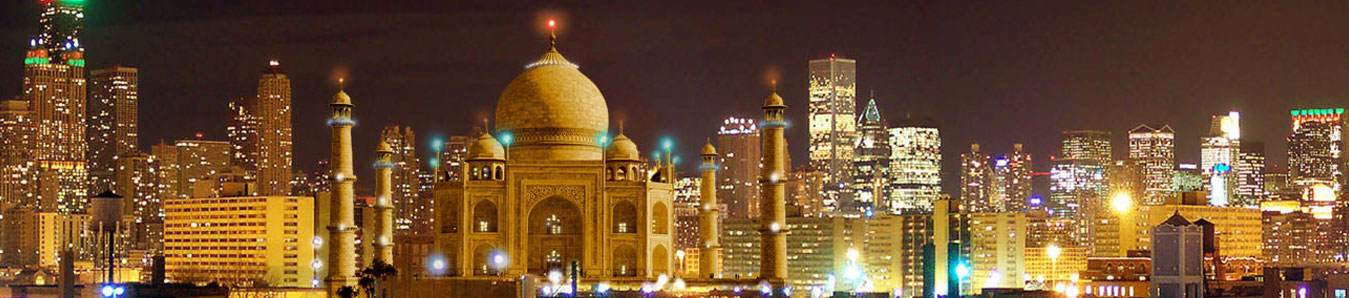
01 Day: Arrival Delhi
Welcome and assistance on arrival at Indira Gandhi International Airport in Delhi and transfer to the pre-booked hotel by aircon car. After check in, travel document related to the tour plan and services will be handed over to you; our representative will explain all your queries about the entire tour plan. Later in the evening visit to see Light and Sound Show at Red fort. The show exhibits wonderful history of the city in a very interesting way. Afterwards return to the hotel for overnight stay.
Light and Sound Show: A spectacular show at the Red Fort. Which makes the 5,000 years old history of the city come alive. Amidst the harmony of the splendidly panoramic and historic environs of the Red Fort, select episodes from the annals of Delhi's historic and majestic past are vibrantly brought to life. Special effects combine with the exceptional character to make this show an impressively memorable experience.
02 Day: Delhi
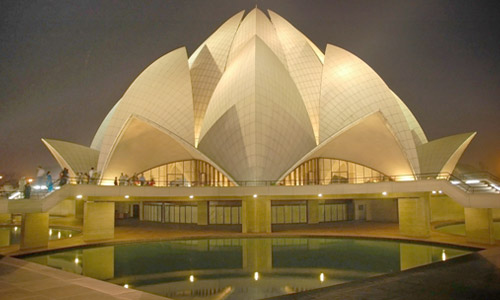
After breakfast, take a sightseeing tour of Old Delhi: the majestic Red Fort, a marvel in red sandstone, Jama Masjid, the largest and most splendid mosque in India, Rajghat, the memorial of Mahatma Gandhi, where he was cremated. The sightseeing continues to explore New Delhi including President House, India gate; built to honour and pay a tribute to the Indian soldiers who sacrificed themselves during the Afghan war, Birla Mandir (Laxmi Narayan Temple), Humayun’s Tomb, lotus shaped Bhai’s Temple, Qutub Minar; built by Qutub-ud-din Aibek of the Slave Dynasty. Sri Radha Parthasarathi Mandir, generally known as the ISKCON Delhi temple. In the evening you can opt for a cycle rickshaw ride through the lively and colourful market of Chandani Chowk. Afterwards return to the hotel for overnight stay.
Delhi, the towering capital city of the independent and largest democratic country in the world: India. Delhi is located and sprawled on both banks of Yamuna River. The city is enriched with culture, architecture and human diversity, Delhi city is a blend of the ancient past of India with the vibration of the modern world. The city designed by the British architect Sir Edwin Lutyens (1869-1944) & is tree-lined & spacious. Legend has it that the Pandavas of epic Mahabharata, the august heroes, founded Delhi around 1200 BC & the name of the city was Indraprastha.
03 Day: Delhi – Sikandra – Agra (210 kms: 5 hrs)
After breakfast check out the hotel and drive to Agra, on the way stop over at Sikandra to see the Tomb of Mughal Emperor Akbar, after visit continue to proceed to Agra, on arrival transfer to the hotel. In the evening, if time permits, must visit Oswal Emporium to watch the replica of Taj Mahal it took 10 years for the artists to build this artistic epitome, also enjoy light and sound show “Mohabbat-the-Taj: the saga of love”, the only show of its kind in India! Later return to the hotel overnight stay.
Agra is famous as being home to one of the Seven Wonders of the World - the Taj Mahal. A pleasant town with a comparatively slow pace, Agra is an old city and it is said that its name was derived from Agrabanad, a forest that finds mention in the epic Mahabharata. Agra is known for its superb inlay work on marble and soapstone by craftsmen who are descendants of those who worked under the Mughals. The city is also famous for its carpets, gold thread embroidery and leather shoes. Agra and Fatehpur Sikri, both are conveniently located close to Delhi. Agra Fort, Sikandra, Ram Bagh and Itmad-Ud-Daulah are some of the noteworthy places to visit apart from the famous Taj Mahal.
04 Day: Agra
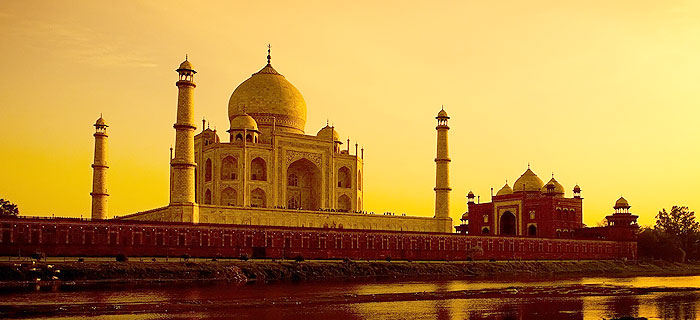
Early morning visit world’s most popular and beautiful monument: Taj Mahal with its’ fabulous view at the time of sunrise. Taj Mahal, a beautiful architectural monument is one of the 7 wonders of the world. This historical masterpiece is an illustration of the fusion of diverse architectural styles. Taj Mahal is the crown of all the lovely buildings in the world and a symbol of eternal love. The tour continues with a visit to Agra Fort. The fort was built in 1576 AD by great Mughal Emperor Akbar, structured and designed with red stoned barricaded; here you will find the splendid Pearl Mosque and various other classic example of art: Jahangir Mahal, Moti Masjid, Macchhi Bhawan, Nagina Masjid, Diwan-i-Khas, Sheesh Mahal, Diwan-e-Am, and Meena Bazaar and Musamman Bhurj. Emperor Shahjahan imprisoned by his rebellious son Aurangzeb in the Musamman Bhurj, would see his love reflecting through the Taj Mahal, where his dear wife was cremated. Afterwards visit Tomb of Itamad-ud-Daula, 35 kms from Agra, built by Empress Noor Jahan daughter of Shahjahan, this monument a tribute to her great father. Later return to the hotel for overnight stay.
Note: Taj Mahal is closed on every Friday.
05 Day: Agra – Fatehpur Sikri – Jaipur (240 kms: 5 - 6 hrs)
Today morning after breakfast check out the hotel and drive to Jaipur. Enroute stop over at Fatehpur Sikri, the old deserted town of the Mughal kingdom, built in red sandstone in honour of Saint Salim Chisti who blessed birth of 3 sons to Emperor Akbar. It is an example of robust stability combined with originality. Each important structure here represents a type by itself. Notable among them is the Diwane e Khas; Punch Mahal, the Tomb of Salim Chisti, and the Buland Darwaza, one of the largest and tallest gateways in the world. Also stop over at Abhaneri near Jaipur, and visit Step Well, it was built by King Chanda of the Chauhan Dynasty, and was dedicated to Hashat Mata, Goddess of Joy and Happiness upon completion. Afterwards continue drive to Jaipur. On arrival, transfer to the hotel for overnight stay.
Jaipur is widely known as the ‘Pink City’ of India. The walls, houses and buildings of the entire city were washed with pink colour for a grand and royal welcome of Prince Albert and Queen Victoria of Britain, who visited Jaipur in 1853 A.D. This splendid city as was founded in 1727 A.D by one of the greatest ruler Jai Singh II. Jaipur is surrounded by hills on three sides. Jaipur is the only city in the world, which is designed in accordance with Hindu architectural science called Shilpa Shastra. The city had been designed in rectangular shape of 9 blocks, depicting the 9 partition of the universe.
06 Day: Jaipur
Today morning after breakfast, explore the Pink City with an excursion to splendid Amber Fort, situated just outside the city, built in the 15th Century by Rajput King Man Singh. Later visit another mighty and majestic Nagargarh fort, close to Amber fort. Drive back to the main city to visit the imperial City Palace - present residence of the royal family of Jaipur. The incredible Jantar Mantar was innovated and constructed by Jaipur King Swai Jai Singh. Splendid Hawa Mahal, also known ‘Palace of Winds’ Birla Temple, with its white shimmering marble glittering in the night. You can visit to Amber fort to see the Light and Sound Show: holds the history of a citadel, pulsating with a legendry past of 600 years & 28 kings of the Kachhwaha dynasty, before their capital moved to Jaipur. Later you can explore the bustling market by hoping onto a cycle rickshaw ride. Enjoy your evening at the most authentic and ethnic village resort: called Chokhi Dhani, designed on the theme of an ethnic village of Rajasthan with lots of traditional environment with entertainment like folk dances, puppet shows, astrology, music, camel ride, Here you can enjoy the traditional Rajasthani food. Afterwards return back to hotel for overnight stay.
07 Day: Jaipur – Neemrana – Delhi (260 kms: 5 hrs)
After breakfast check out of the hotel and drive to Delhi. En route visit massive and splendid Neemrana Fort, recalling the old world charm of Rajasthani majesty and hospitality. One of the magnificent forts of Rajasthan converted into a heritage hotel, a wonderful architectural marvel. Here you can experience the adventure of India’s first ZIP Tour and opt for lunch at the hotel. (Of your own) Later continue drive to Delhi, on arrival transfer to the hotel for overnight stay.
Neemrana Fort It was a tributary chief ship of the former kings of Alwar state. The track is sandy and bleak and is known as Rath. The place is said to be the home of chauhan Rajput claiming descent from Prithvi Raj the last Hindu king before the regime of the Mughal kingdom. One of the descendents of Prithvi Raj the, embraced Islam and settled here. That is why the old lineage is shown by the title Rao and was recognized so by the ruler of Alwar.
08 Day: Delhi – Aurangabad (By Air)
Today morning after breakfast chack out the hotel, and transfer to domestic airport to board the morning flight for Aurangabad. On arrival, transfer to the hotel. Aurangabad is popularly known for ancient temples of India. There around 34 Buddhist caves and around 17 Hindus. After relaxation take a city tour of Aurangabad: visiting Daulatabad Fort. Originally the mountainous Deogiri fortress, it was an old Hindu stronghold, finally detained and pillaged by deceit during 13th century. Afterwards visit Bibi ka Maqbara; tomb of Begum Rabia Durani, queen of Mughal Emperor Aurangzeb. Due to its resembling Taj, this is called Taj Mahal of Deccan. Return to the hotel for overnight stay.
Aurangabad is one of popular culture and heritage city of Maharashtra state, the city was founded in 1610 Ad by Mughal ruler Nilam Shah II, near the village of Khirki in Maharashtra. The city is quite known by its most popular tourist attractions Ajanta Ellora Caves and Daulatabad Fort. The name Aurangabad deprived by Mughal ruler Aurangzeb, there are various other historical Mughal monuments are around the city: Mausoleum of wife of Aurangzeb called ‘Bibi Ka Maqbara’ depicting Taj Mahal of Agra. Panchakki is also worth to visit built in 1624 a water mill, made to tribute to Muslim Saint Baba Shah Musafir. The city is quite popular for Himroo products and Bidri work.
09 Day: Aurangabad – Ajanta – Aurangabad (105 kms: 2 hrs one way)
After an early breakfast take an excursion to the famous Ajanta caves. Ajanta is one of the few historical and architectural marvels of India. Recognized as the World Heritage Site today, it was discovered during the 19th century by a group of British officers who were on a tiger hunt. Later if time permit you may opt to visit Jami Masjid, Bharatmata Mandir, the Chand Minar, Elephant Tank and 'Chini Mahal' or Chinese Palace are the important monuments inside the fort. Khuldabad ("Heavenly Abode"), Many historical figures are buried here including Aurangzeb, the last major Mughal emperor. Afterwards drive back to Aurangabad for overnight stay.
Ajanta, It was only in the 19th century, that the Ajanta group of caves, located deep in mountain range of Sahyadri, built into the curved mountain side, on the top of Waghora River. These caves were discovered unexpectedly by some British officers, who were on hunt in Sahyadri Hills. Ajanta caves enchants the great period of Buddhism during 200 BC till 650 Ad. There 29 caves were built as sheltered retreats of the Buddhist monks, who educated and performed rituals in the Vihara and Chaitya, the ancient place of religious and spiritual learning, and key hub of the Buddhist era and it’s cultural movement.
Note: The Ajanta Caves are closed to public on all Monday.
10 Day: Aurangabad – Ellora (30 kms: ½ hr) – Mumbai (By Air)
After breakfast take a sightseeing tour of Ellora, one of the highly visited World heritage sites of India. It houses 34 monasteries and temples with some exclusive uninterrupted sequence of monuments that date back from 600 to 1000 AD. It also has some of the excellent stonework depicting the legends related to Lord Shiva. After visit return back to the Aurangabad. Later check out of the hotel and drive to the airport to board the flight for Mumbai. On arrival, transfer to the hotel. Overnight at the hotel.
Ellora, The Ellora caves, 34 in number, are carved into the sides of a basaltic hill, 30 kms away from Aurangabad city. The optimum specimens and masterpiece of cave temple architecture, Ellora caves elaborates frontage and elegantly decorated ancient interiors. These structures define the era of 3 religions Buddhism, Hinduism and Jainism, these caves were cut and carved between 350 AD to 700 AD. In the South side there are 12 Buddhist caves, 17 Hinduism caves are in the centre and 5 Jain caves are in the north side.
Note: The Ellora caves are closed to public on all Tuesday.
11 Day: Mumbai
Today morning after breakfast take a sightseeing tour of Mumbai city, firstly visit to Gateway of India and cruise by motorboats to Elephanta Caves - ancient rock cut caves dedicated to Lord Shiva. Later cruise back to Gate Way of India. And sightseeing continues visiting Prince of Wales Museum- A heritage museum exhibits ancient artifacts. Parliament house- (From outside), Nariman Point- Commercial Hub, Marine Drive- a most beautiful laid boulevards of the city. Dhobhi Ghat- a famous open air laundry, Mani Bhawan- Known also Gandhi Bhawan. Chhatrapati Shivaji Terminus (CST), formerly Victoria Terminus, is a UNESCO World Heritage Site and an historic railway station in Mumbai, Bandra Worli Sealink, which crosses the Arabian Sea, linking the Mumbai suburbs with south Mumbai, is viewed as an engineering marvel. Later return to the hotel. You may also opt to enjoy Mumbai night life visiting pub, bars and restaurants of the city. Overnight at the hotel in Mumbai
Mumbai: the largest city of India and capital of Maharashtra state, overlooking the Arabian Sea- a major port of India. Mumbai is one of the 7 island on Konkan coastline; the name Mumbai derives it’s from Goddess Mumbai Devi. The city is blend of ancient architectural charm past and dazzling contrast of modern style of architecture, most of them built during the British regime. Often Mumbai is called Economical Capital of India due its economical contribution to the country. The city is the homeland of Bollywood industry. Mumbai offers many fair and festivals, places of interest for tourists.
Note: Elephanta Caves and Prince of Wales museum are closed on every Monday.
12 Day: Mumbai – Hometown
After breakfast, morning is free for leisure and shopping in the local markets or in Colaba Causeway, Fashion Street in South Mumbai and Linking Road at Bandra in western Suburbanis one of the famous markets for everything. And there are numbers of malls in the western suburban: In orbit Mall and Infinity Mall and other shops in Juhu and other places. Later transfer to the airport to board the schedule flight for home town/onwards journey. On departure tour conclude with the happy memories.
Since the precise cost of a customized tour is subject to specific accommodation choices, travel period (date/month/year), nos of pax travelling together and other custom preferences. However, to enable you to chalk out your holiday plan, we suggest following budget guidelines (minimum 2 people are travelling together & sharing one double room) for a customized tour:


Design your tour with our expertise Plan My Trip