01 Day: Arrival Bangalore
Welcome to the International Airport at Bangalore, our representative will assist and escort you by a car and transfer you to the pre-booked hotel. During your check in, all the required documents related to the tour, will be given to you and all your queries in concern to the tour and services will be explained. If you are arriving by early flight, after relaxation you can take a walk to have a glance of the city, visiting local markets and restaurants. Overnight stay at the hotel.
Bangalore: Capital of Karnataka State, Bangalore is famous as the city of gardens. It is one of the most attractive cities in India with its beautiful parks avenues and impressive buildings. Bangalore is renowned as much for its industrial plants as for its silk saris, and for the sprawling Cubbon Park, which lies at the heart of the city, as also its prestigious race course. It is now part of the great Silicone Valley, is a beautiful city filled with the tranquillity of its greenery. The Lalbagh garden is particularly beauliful and well laid out.
02 Day: Bangalore
Today morning after breafkast take a sightseeing tour of the city visiting ISKCON Temple, Hare Krishna Hill is the Hill on which this temple is situated. Lal Baugh– One of the main gardens in the city; Cubbon Park– a garden laid down by Lord Cubbon in 1864. The Bull Temple – The 4.57 m high and 6.10 meters long image is carved out of single granite rock. Later followed by visit to Sri Gavi Gangadhareshwara Temple– The temple is natural monolith carved cave temple dedicated to Lord Shiva. Also visit, Vishweshwaraiah Technological Museum, Vidhana Soudha. In the evening you can visit Ulsoor Lake. Overnight stay at the hotel.
03 Day: Bangalore – Srirangapatna – Mysore (150 kms: 4 hrs)
After an early breakfast check out the hotel and drive to Mysore. Enroute visit the Srirangapatnam (20 kms from Mysore) to visit Fort and Sri Ranganathaswami Temple. After sightseeing continues drive to Mysore, on arrival transfer to the hotel, Mysore is the Sandalwood and Incense Capital of the World & some of India’s finest Crafts, such as Printed Silk, Inlaid, Furniture and Ivory Carvings are also found here. Also known as the City of Palaces, Mysore retains a quaint charm that never fails to enchant. After relaxation take a sightseeing tour of the city visiting Brindavan gardens & spectacular musical fountains, followed by flower and sandal wood market, handicraft museum. Overnight stay at the hotel.
Srirangapatna (Srirangapatnam) is an island town on the Bangalore-Mysore Highway The town obtained its name from a 1000 year old temple of Lord Sriranganatha. This history-rich town was the capital of Hyder Ali and his son Tipu Sultan - The Tiger of Mysore. Tipu Sultan, the eldest son of Haider Ali, was born on December 10, 1750 at Devanhalli. On his father's death in 1782, Tipu Sultan assumed power in Mysore. He continued fighting the British and defeated them in 1783.
04 Day: Mysore
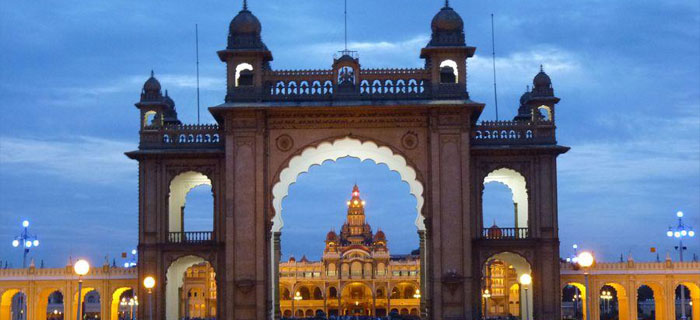
After breakfast visit the Palace of the Maharaja (Emperor) built in 1911 – 1912. The palace is a harmonious synthesis of the Hindu and saracenic styles of architecture with magnificent archways, domes, turrets, colonnades and sculptures. Also visit the St. Philomenas cathedral followed by a drive up to Chamundi hill to see Chamundeshwari Temple and a panoramic view of Mysore. On the way back, see the Nandi Bull. Evening is free for leisure, or you may opt to visit to the local market to enjoy the local food, offered by various restaurants. Overnight stay at the hotel.
Mysore, the capital city of the Wodeyars has always enchanted its admirers with its quaint charm, rich heritage, magnificent palaces, beautifully laid-out gardens, imposing buildings, broad shady avenues and sacred temples. Mysore races its history back to the mythical past, when Goddess Chamundeshwari of Chamundi Hills killed the wicked buffalo-headed demon, Mahishasura. Mysore Dasara is the celebration of this victory of good over evil.
05 Day: Mysore – Ooty (125 kms: 4 hrs)
After breakfast check out the hotel and drive to Ooty, on arrival transfer to the hotel. After refreshment visit Botanical Gardens, Ooty Lake: is surrounded by green hills and huge trees. The Fern hill Palace: was the erstwhile summer residence of the Maharaja of Mysore. Ooty Golf Links: The golf course is set at an altitude of 7200 feet. Dodabetta Peak: highest point in South India, Pine Forest: a scenic canvas to the valleys and the vast landscapes of the Nilgiris. Later return to the hotel for overnight stay.
Ooty: Known as the queen of hills and the most popular hill station in the South India. It is located in the Nilgiri hills at 2286 meter above sea level. With its rolling lawns and salubrious climate it became the important hill station in South India and the summer capital of the former Madras presidency. Ooty still has the touch of the Raj about it, with its cottages and pretty gardens and stone churches that stands among the groves of pine. Old summer palaces of maharajas are now hotels and set in their beautiful parks.
06 Day: Ooty
After breakfast take a sightseeing tour of this picturesque hill station visiting Botanical Gardens, a wealth of variety of plants that include different types of roses, imported shrubs, rare flowering plants, eucalyptus trees, several old trees and even a fossilized tree trunk that is 20 million years old, followed by boat rides and fishing, Ooty Lake : is surrounded by green hills and huge trees. The sight of lake from the shores is mesmerizing. The Fern hill Palace: was the erstwhile summer residence of the Maharaja of Mysore. The first Fern hills bungalow was built in 1844 as a private The palace resembles a Swiss Chalet, Ooty Golf Links: The golf course is set at an altitude of 7200 feet. The course extends over 193.56 acres and comprises 18 holes. Dodabetta Peak: highest point in South India, Pine Forest: a scenic canvas to the valleys and the vast landscapes of the Nilgiris. Later return to the hotel for overnight stay.
07 Day: Ooty – Coonoor – Ooty (20 kms: 1 ½ hr)
Today morning after breakfast, take the toy train from Ooty to Coonoor- this train runs between Metupalaiyam-Udagamandalam (Ooty), via Coonoor, in the Nilgiri Hills. The track is 46 kilometers (28.5 miles) long, and passes over 26 viaducts, and through 16 tunnels and tall girder bridges. This railway is particularly picturesque because of the surrounding rocky terrain, tea plantations, and forested hills. Coonoor, with its worldly famous tea, is a tourist destination in itself. On arrival explore the surrounding places: Ketti Valley –the second largest valley in the world is best viewed if you walk in the railway tracks from Ketti to Aravangadu, Coonoor Golf Links, Wellington Army Barracks (Need Prior Permission for a full tour), SIMS Park, a 12-hectare park exhibiting over 1000 species of plants, Visit Lambs nose followed by Dolphins Nose (10 km. away from Coonoor) offering an excellent view. It encompasses the Catherine Falls (250 feet). Afterwards return back to Ooty by car. Evening is free to enjoy the natural surroundings of the hill stations. Overnight stay at the hotel.
Coonoor: a pretty hill town, located in the western part of Tamil Nadu, Coonoor is the second largest hill station in the Nilgiris. The place has a variety of wildflowers and birds. It is also popular for activities like trekking and hiking. Coonoor is also talked about for its tea plantations and festivals. A toy train connects Coonoor with some of the other hill stations of the Nilgiris. Situated at an altitude of 1850 m above the sea level, the weather of Coonoor remains very pleasant throughout the year.
06 Day: Ooty – Guruvayur – Cochin (280 kms: 7 hrs)
Early morning drive to Cochin. Enroute visit to visit to Guruvayur Temple, dedicated to Lord Krishna, one of the most popular pilgrim centers of India, followed by visit to Punnathur Kotta, where 44 elephants belong to the Guruvayur Krishna Temple are fenced and fed in the Punnathur Kotta. Afterwards drive to Cochin. On arrival, transfer to the hotel. Rest of the evening is free for leisure. Overnight at the hotel.
Kochi (colonial name Cochin) is a vibrant city situated on the south-west coast of the Indian peninsula in the breathtakingly scenic and prosperous state of Kerala, hailed as 'God's Own Country'. Its strategic importance over the centuries is underlined by the sobriquet Queen of the Arabian Sea. Informally, Cochin is also referred to as the Gateway to Kerala. From time immemorial, the Arabs, British, Chinese, Dutch, and Portuguese have left indelible marks on the history and development of Cochin.
07 Day: Cochin
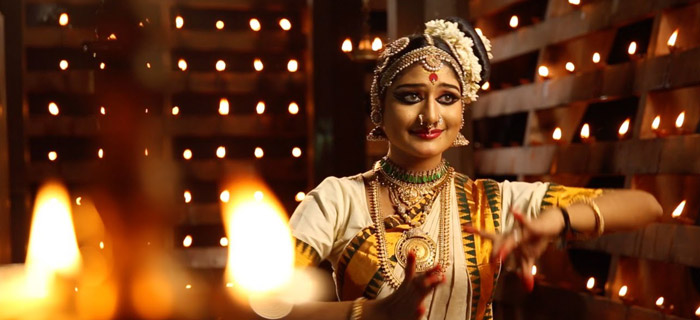
After breakfast, take a sightseeing tour of Cochin: Oasis state of Kerala & on to the Malabar Coasts & Kochi (formerly Cochin), one of the India's most colourful cities. Visit to Fort Cochin & St. Frances Church to see the town of Vasco da Gama. We also see the Jewish Synagogue & the Mattancherry "Dutch" Palace. This evening a memorable experience in any journey in Kerala is a Boat Trip along the Palm Fringed Lakes & Backwaters of the Area; we enjoy this extraordinary excursion today. As we sail along the shady canals we see cantilevered Chinese fishing nets. From our launch, we enjoy use of narrow produced - Laden dugouts & the everyday life of families living on narrow spits of land between the waters. In the evening enjoy the Kathakali, one of India's most famous Classical dances. Lavish Costumes & Exotic makeup & Masks intensify the beauty of the dancers, intricate moments. Overnight stay at the hotel.
08 Day: Cochin – Munnar (140 kms: 5 hrs)
Today morning after breakfast check out the hotel and drive to Munnar. En route stop over at speculative Cheyyappara Waterfalls. During the drive to Munnar, you can see tea gardens spread like a green carpet over hundreds of miles, lush green hills, and a place so difficult to articulate. After visit proceed to Munnar, on arrival, transfer to the hotel. You can take a short tour of the Munnar hill station exploring tea gardens and the panoramic view of the hills, lakes and forests of this wonderful hill station. Overnight stay at the hotel.
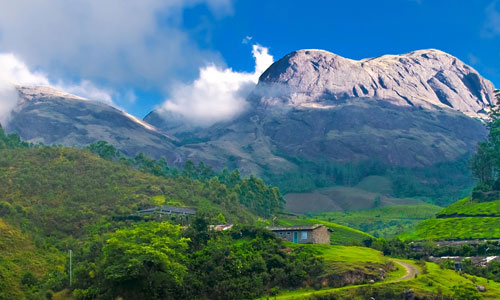
Munnar, the erstwhile 'summer capital of the British', has become the most sought after holiday destination in South India. It is the luxuriant gift of nature to the Western Ghats, the eastern border of Kerala, 5000ft above sea level. Dense forests, wildlife sanctuaries, and major cash crop plantations cover most of this region. Munnar abounds in animals like elephants and Nilgiri Thar and rich biodiversity teeming with flora and fauna.
09 Day: Munnar
Today morning after breakfast explore this panoramic hill station- visit Pothamedu to enjoy picturesque view of the coffee, tea, cardamom and other spices plantations in Munnar, Devikulam (7 km from Munnar), this tranquil hill station with its velvet lawns, vibrant flora and fauna with picturesque mountains, a rare experience. Blossom International Park is about 3 km away from Munnar, Mattupetty Dam and its reservoir is located 13 km away from Munnar, Mattupetty is also known for the Indo-Swiss Farm and a dairy farm, Echo Point and Kundala Lake. In the evening you can take a tea and coffee and spices plantation tour visiting tea museum. Later return to the hotel for overnight stay.
10 Day: Munnar – Periyar (90 kms: 3 hrs)
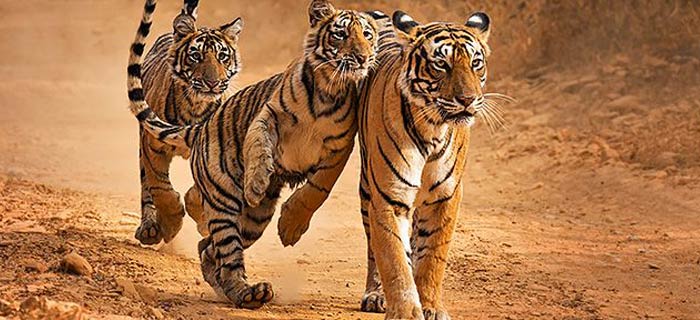
Today morning after breakfast check out from the hotel and drive to Periyar (Thekkady), on arrival transfer to the Jungle Resort, after refreshment visit the Periyar Wildlife Sanctuary, explore the park, animals found here are elephant, wild boars and gaur and birds like grey heron and ibis, here you can enjoy elephant safari in the park and boating at Periyar Lake to view animals, if you are lucky one, may see rare tiger as well and bathing elephants. Later take a spice plantation tour to see crops of cinnamon, cardamom, pepper, tea and coffee estates etc. On your way back to the hotel, a stopover to the local spice market to shop some fragrant spices. Dinner and overnight at the hotel.
Periyar: Famous for Periyar Wildlife Sanctuary is located on the bank of Periyar River in Kerala, one of India's biggest wildlife sanctuaries covering 778 square kilometers, this sanctuary also houses Tiger Reserve. Periyar National Park is blend of mercerising charming beauty and affluent nature surroundings. The sanctuary houses sizable population of elephants, also Tiger, Sambars, Bisons, Antelopes and Wild Boars. Here one can enjoy Elephant safari exploring dense forests on the back of Elephant.
11 Day: Periyar – Alleppey (140 kms: 4 hrs) Backwaters tours through sailing boat
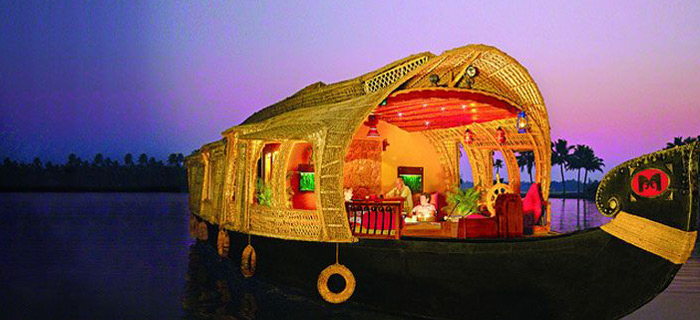
After breakfast check out the hotel and drive for Alleppey, on arrival check in to the houseboat and journey begins to explore backwaters world though sailing boat passing thorough tropical countryside, enjoying view of palm fringed narrow canals winding through the vast expanse of paddy fields and the neat tiny hamlets lined up along either side of the canals are panoramic sights. On the way one can see The Chinese fishing nets, the reminiscent of our past trade links, groups of duck swimming around and colourful birds flying across the sky remains as enduring pictures treasured in our memories, you can try your hands in fishing from the houseboats. In the evening enjoy beautiful sunset from the sun-deck of the houseboats. Enjoy the dinner of your choice cooked and served by the Chef. Dinner and overnight at the houseboat.
Alleppey: a calm backwater town is the center for backwater cruises in Kerala. It has a large network of water canals, which passes through the town, provides its lifeline & has a long sandy beach. Alleppy is also famous for Speculative Nehru Trophy Boat Race, celebrated every year- in month of August, the most colourful and exotic snake boat race in Kerala. The city is known for coir products.
Houseboat: Generated through electricity; with sitting cum dining area, private bedroom with attached English toilets, sun deck and fully loaded kitchen with a Chef, and Srank (Driver).
Backwaters Tours: The mystifying intricate of forty-five rivers that creates around 900 km roundabout lakes, lagoons, canals, estuaries and deltas in the South Indian state of Kerala, This topographical persona blessed the God's Own Country with elaborate water worlds, commonly known as 'backwaters'. Cruising all along the backwaters of Kerala is an ultimate way to discern its implausible foliage, bona fide, affluent ethnicity and wildlife. The tranquil, steep and Sluggish backwaters tour is like inspiring depictions of nature’s beauty witnessed by the tourists.
12 Day: Alleppey – Kovalam (160 kms: 3 - 4 hrs)
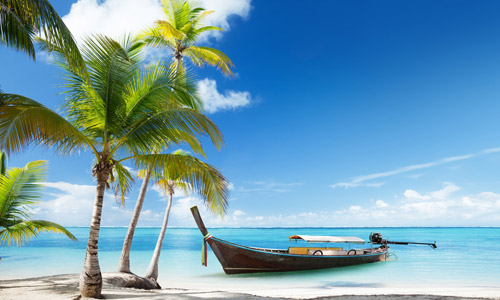
Today morning after breakfast disembark from the houseboat and drive to Kovalam, on arrival transfer to the beach resort. Kovalam is the most picturesque beach of Kerala and just 16 kms away from - Trivandrum; Kovalam is quite famous for Ayurveda treatment and massage. After some relaxation you can enjoy beach activities on Kovalam beach with - surfing skiing and kayaking. Enjoy the sunbathing and Ayurveda massage under the tropical sun. Overnight at the beach resort at Kovalam.
Kovalam: On the Malabar Coast along the Kerala shoreline is a small village; called Kovalam is 16 kms away from Trivandrum, a sheltered bay endowed with unusual beauty. This natural bay is a safe sea-pool free from high waves and surge. The beach resort here is of international standard. Today Kovalam has become one of the most popular beach hangouts in India. Kovalam means a grove of coconut trees and truly the coconut trees along the beaches gives it a paradise of nature.
13 Day: Kovalam
Today morning after breakfast you can enjoy the day on the sandy beach – may opt for water sports and wellness : Sunbathing, water skiing, Angling, Para- sailing, surfing etc…you may experience renown Ayurveda massage, herbal body toning, treatment offered at most of resorts, this will not give you just relaxation, in fact rejuvenates your body, mind and soul. You can also enjoy special cultural programme and catamaran cruising. Overnight at the resort at Kovalam.
Ayurveda, means the science of healthy living, derives its name from the Sanskrit words, AYUSH (LIFE) and VEDA (KNOWLEDGE). It looks at healing in a holistic fashion. The physical treatment has overtones of philosophical and psychological approaches too. Any ailment in the body is viewed as a result of a combination of factors with special reference to the components of diet. It is here that Ayurveda recognizes that each individual is different and so treatment too should be customized. The Ayurvedic principles are found in detail in Atharva Veda, one of the four Vedas of Hinduism.
14 Day: Kovalam – Kanyakumari (85 kms: 2 hrs)
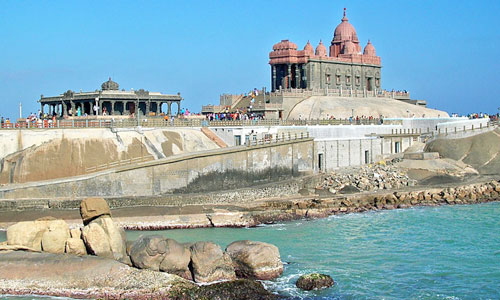
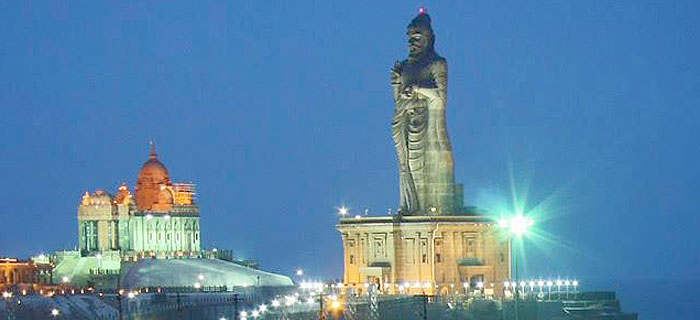
After breakfast check out the beach resort and drive to Kanyakumari, on arrival check into the hotel. After relaxation visit: Kumari Amman Devi Temple- dedicated to Goddess Devi Kanya, an embodiment of Goddess Parvati. Gandhi Mandapam - Dedicated to Mahatma Gandhi- The father of Nation. Then early evening boat cruise to Swami Vivekananda Memorial - where Swami Vivekananda meditated and decided to carry his message of peace across the world. Thiruvalluvar Statue- is the land mark of the Kanyakumari. In the evening enjoy the amazing sunset from Murugan Kundram hills, also rising sun on the same horizon, one of the phenomenal and rare experience in Kanyakumari. Overnight at the hotel in Kanyakumari.
Kanyakumari Referred to by the British as Cape Commorin, Kanyakumari in the state of Tamilnadu is located at the southernmost tip of the peninsular Indian. It derives its name from the small temple dedicated to Kanyakumari or the youthful form of the primeval energy Shakti (Mother Goddess) located on the city’s shore. Kanyakumari is the point of confluence of three oceans - the Bay of Bengal, the Arabian Sea and the Indian Ocean. This well-known Hindu pilgrimage center is famous for its beautiful sights of sunrise and sunset over the waters.
15 Day: Kanyakumari – Rameshwaram (300 kms: 6 -7 hrs)
Today morning after breakfast check out the hotel and drive to Rameshwaram. On arrival, transfer to the hotel. After relaxation if time permits in the evening you can visit Adam's Bridge (Ram Setu) the name given to the chain of reefs, sandbanks and islets that almost connects Sri Lanka with India. According to legend, this is the series of stepping stones used by the monkey army, led by Hanuman to cross the ocean in a bid to rescue Sita from the clutch of Ravana. Overnight at the hotel, in Rameshwaram.
Rameshwaram is an island separated from the mainland by a small strait of water. Rameshwaram is famous for the Hindu temple dedicated to Lord Rama who, it is believed, had descended on its shores and built a bridge across the Palk Strait to reach Lanka in his quest to rescue Sita from Ravana. Additionally, the temple is famous for being one of the 12 Jyotirlingas of Siva. Lord Rama had constructed a Siva linga in order to offer thanks to the Lord after killing Ravana. Hence, the temple is a sacred site for both Shaivites and Vaishnavites.
16 Day: Rameshwaram – Madurai (170 kms: 4 hrs)
Today morning after breakfast and take sightseeing tour of city visiting, Often referred to as the ‘Island of Prayer’, and also considered to Varanasi of the South this major pilgrimage centre is on an island in the Gulf of Mannar. Most of the town’s places to stay and eat are cluttered around the Ramanathaswamy Temple. Built in the 12th century AD, the temple with its awe-inspiring corridors, and the longest in India. Later checkout the hotel and drive to Madurai. On arrival, transfer to the hotel. Evening is free for relaxations and individual activities. Overnight stay at the hotel.
Madurai, the cultural capital and second largest city of Tamil Nadu is one of the oldest cities of southern India. Madurai has been a centre of learning and pilgrimage, for centuries. It is believed that, the divine nectar falling from Lord Shiva's locks, gave the city its name - Madhurapuri, now known as Madurai. Known as the temple city, Madurai is situated on the banks of the River Vaigai. Madurai is also an important pilgrimage center. The 985 beautiful pillared Meenakshi Amman Temple is the major attraction of Madurai. The city is also renowned for its textile mills, engineering industries and large university areas.
17 Day: Madurai
After breakfast, visit the Meenakshi Sundareshwar, one of the largest temple complexes in India built between the 16th and 18th centuries. Apart from the estimated 33 million sculptures there, the temple is absolutely absorbing with the endless rounds of ceremonies, prostration of countless devotees and glittering market stalls. Later visit Tiruparankundram Murugan Temple, Palamuthirsolai Murugan Temple. Also visit the Tirumal Nayak’s Palace; a highly decorative monument. Its enormous roofed arcade supported by 48 – foot high stone pillar, still stands. In the evening visit the famous Meenakshi Sundareshwar Temple to attend the Aarti (Prayers) witnessing interesting rituals and ceremonies. Overnight stay at the hotel.
18 Day: Madurai – Trichy – Tanjore (190 kms: 5 hrs)
Early morning, check out from the hotel and drive to Tanjore. en route visit Trichy; the most famous landmark of this bustling town is the Rock Fort Temple, a spectacular monument perched on a massive rocky outcrop. The Sri Ranganathanswami Temple is one of the largest and most interesting temple complexes in India, built on an island in the middle of the Cauvery River and covers a staggering 2.5 sq km followed by a visit to Jambukeshwara temple. After visit drive to Tanjore, on arrival transfer to the hotel, evening is free for rest and relaxation. Overnight stay at the hotel.
Trichy: The city is surrounded by the rock fort. On the top of the rock there is a fort and a temple. After crossing 434 rocks cut steps, there is a temple called Mathrubhutewarar temple which is dedicated to lord Siva. There is another temple called Ucchi Pilliar temple, which is dedicated to lord Ganesh and located at the top of the rock. The entire city can be seen from this place. Srirangam temple and Sri Jambukeshwara temple are famous in Trichy.
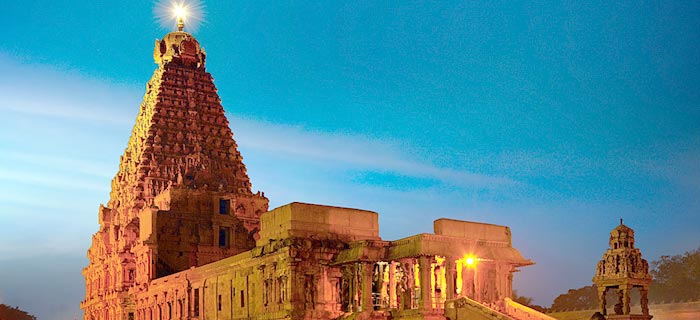
Tanjore or Thanjavur as it was earlier called, was the capital of the chola empire from the 10th century to the 14th century A.D. later is become part of the Vijay nagar kingdom political. Literary and religious centre of the South. The celebrated temple Brihadeshra built by the Chola King during the 11th century is its major attraction. The saraswati Mahal library, dating back from the time of the Marathas, containing a rare collection of books and manuscripts on paper and palm leaves. .
19 Day: Tanjore – Chidambaram – Pondicherry (200 kms: 5 hrs)
After breakfast take a sightseeing tour of the city visiting Brihadeshwara temple built by Raja and is termed as the crowning glory of Chola temple architecture and falls under the World Heritage sites. Also visit the Thanjavur Palace, which was constructed in 1550 with huge corridors, spacious halls, observation and arsenal towers. Visit the Saraswati Mahal Library - housing some of the most important oriental manuscripts collections in India. Established around 1700 AD, the library contains a collection of over 44,000 palm leaves, and paper manuscripts in Indian and European languages. After visit drive to Pondicherry, enroute visit Chidambaram and see the famous Nataraj Temple depicting Lord Shiva as a cosmic dancer. After visit continue to proceed to Pondicherry, on arrival transfer to the hotel. Evening you can visit local market and French colonies. Overnight stay at the hotel.
Chidambaram (also Thillai) literally means the sky permeated by an atmosphere of intelligence and wisdom. According to legend, it was once a forest of tillai, a mangrove species of trees. There was once a small shrine on the banks of a tank. The saints Vyagrapada and Patanjali are said to have worshipped at this shrine, now called Thirumoolanathar. It is believed that their penance attained fruition with the revelation of Shiva's cosmic dance by Lord Nataraja on the auspicious Thai Poosam day.
Pondicherry: This attractive, former French colony exudes a Mediterranean aura with its sophisticated streets, elegant houses, ornamental gardens and the Hotel de Ville. History of Pondicherry: A former French colonial cit, located along the Bay of Bengal didn't come under Indian rule until 1954. You can still hear a fair bit of French being spoken as you stroll along its remaining seaside villas and cobblestone streets. The city is really two towns in one: La Ville Blanche, the colonials' former playground, and La Ville Noire, the crowded inland area where the native Indian population was forced to live.
20 Day: Pondicherry
After breakfast take a sightseeing tour of Pondicherry, visiting the Sri Aurobindo Ashram and the Ecole Françoise d’Extreme Orient, which is nearly 100 years old and offers programs in Sanskrit, Tamil and Archaeological studies. The French Catholic influence is evident in a number of churches, notably the Jesuit Cathedral (Notre Dame de la Conception’ 16941-1765), The Church of Our Lady of Angels (1855), famous for an oil painting of our Lady of Assumption given to the Church by King Louis Napoleon III, and the 17th century Chapel of Our Sisters of Cluny. Also visit Auroville, the planned city of Dawn of the new world. In the evening take a walk at the promenade by the beach. You will find here some of the most significant landmarks like the statues of Mahatma Gandhi, Jeanne d'Arc, Duplex, the elegant War Memorial raised by the French, the heritage building "Mairie", the 27m tall old Lighthouse. After sightseeing return to the hotel for overnight stay.
21 Day: Pondicherry – Mahabalipuram (95 kms: 2 hrs)
After breakfast checkout the hotel and drive to Mahabalipuram. On arrival, transfer to the hotel. After relaxation take a sightseeing tour of Mahabalipuram; a sculptor's delight boasting of some of India's most sublime rock-cut art falling under the UNESCO World Heritage Site. Visit the seven pagoda-style Shore temples, Rathas, Arjuna's Penance, Krishna Mandapa, Shore Temple, Mahishasurmardini Cave, Varaha Mandapa and Mandapams. Overnight stay at the hotel.
Mahabalipuram with its picturesque location on a rocky outcrop between the beach and a lagoon is a happy combination of history, good beaches, hassle-free tourism and fabulous fish and lobster! Despite the many visitors, drawn by the former Pallava dynasty town, the place is friendly, relaxed, and the villagers are remarkably unperturbed by their crowds of visitors. Mahabalipuram is renowned for its series of charming rathas and the spectacular carved relief depicting Arjuna's Penance.
22 Day: Mahabalipuram – Kanchipuram – Tirupati (180 kms: 5 hrs)
After breakfast check out from the hotel and drive to Kanchipuram, Kanchipuram to explore the ancient capital of the Pallavas famous for its 1000 temples, of which 124 shrines still remain. Visit the most famous temple: Kailasnathar; built during 685 A.D. to 705 A.D. The architecture of the temple is a fine example of the Dravidian style of architecture carved out of sandstone. Visit other temples like Vaikuntaperumal, Ekambareshwara, Kamakshiamma and Sakiswarar. Go shopping at the world famous silk cloth markets. Afterwards drive to Tirupati, on arrival transfer to the hotel for overnight stay.
Kanchipuram is known as one of India's Seven Sacred cities. Kanchipuram was, one of India's seven sacred cities. Kanchipuram was the historical capital of the Pallavas. It was under the Pallavas from 6th to 8th century A.D and later became the citadel of Cholas, Vijayanagar Kings, the Muslim and the British. It has been a centre of Tamil learning, cultural and religious background for centuries. Kanchi is also known centre of the finest silk sarees made in the country. Kanchi has magnificent temples of unique architectural beauty bearing eloquent testimony to its glorious Dravidian heritage.
Tirupati is famed for the shrine on the Seven Hills of Tirumala dedicated to Lord Venkateshwara. The town of Tirupati is one of the most ancient and sacred pilgrimage spots in India. The hill near the temple is called ‘Tirumala’ or the “sacred hill.” The temple is said to be the busiest in the world and the Brahmotsavam is undoubtedly celebrated for its oriental pomp and pageantry in September every year. One of the major attractions in Tirupati is the world famous Sri Venkateswara Temple. Other temples are Shri Kalyana Venkateswaraswami Temple. You can also visit Tiruchanur, where the temple of Sri Padmavathi Devi is situated.
23 Day: Tirupati – Chennai (140 kms: 4 hrs)
After breakfast visit Tirupati. A temple and pilgrim town located at the foot of the Tirumala Hills on which the ancient and beautiful temple of Lord Venkateshwara stands. Spread over seven hills, this township is the most picturesque pilgrimage centre in the south. One must see the fervour with which the devotees stand in long queues for a glimpse of their Lord. Masses of coins, jewellery & hair are received as offerings. Proceed for Darshan of Lord Balaji. After darshan drive to Chennai, on arrival transfer to the hotel for overnight stay.
Chennai (Madras): the capital of the state of Tamil Nadu is the most convenient point of entry. Chennai has an international airport, a seaport and a rail and road network that links it to all major towns and cities of the region. Tamil Nadu is a bastion of Hinduism, whose past endures into the present. Temples with towering spires called gopurams are a common feature of this state, seldom seen anywhere else in the country. Temples in Tamil Nadu were the fulcrums of society and even today art forms that have their origin in religious worship continue to colour daily life.
24 Day: Chennai
After breakfast, take a sightseeing tour of Chennai; the gateway of South India will put you in touch with a different phase of India - classical, ancient, gentle. Chennai is the 4th largest city in India, spread over 50 miles and features a large and beautiful waterfront on the Bay of Bengal. Start the tour with visit to Kalashetra & join the Heritage Walking tour which starts from 0830 AM for 03 hours (closed on Saturday & Sunday) Visit The St. George Fort (closed on Friday), Santhome Cathedral & Snake Park (closed on Tuesdays) In the evening, optionally you can visit the flower and fruit market, and then explore Marina Beach, the second longest beach in the world. Overnight stay at the hotel.
25 Day: Chennai – Home town (By Air)
After breakfast check out the hotel and transfer to the airport to board the scheduled flight for home town. On departure, the tour concludes with happy memories.
Since the precise cost of a customized tour is subject to specific accommodation choices, travel period (date/month/year), nos of pax travelling together and other custom preferences. However, to enable you to chalk out your holiday plan, we suggest following budget guidelines (minimum 2 people are travelling together & sharing one double room) for a customized tour:

Design your tour with our expertise Plan My Trip