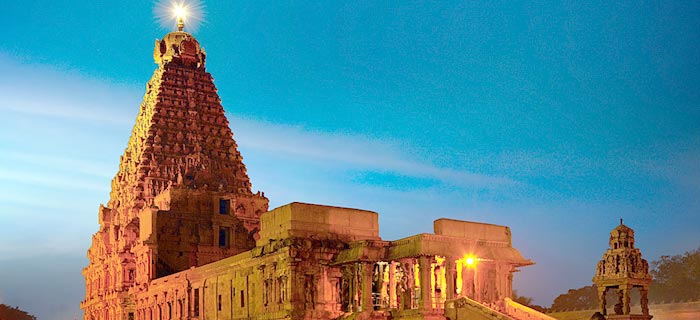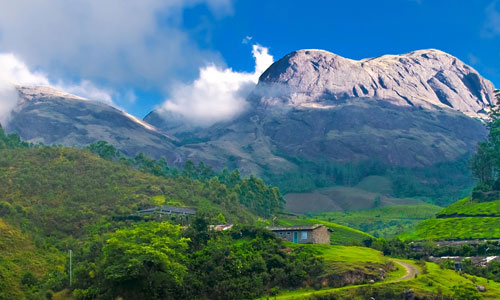
The Badrinath temple is the pride of this temple town. Located at a breathtaking altitude of 11,268 ft on the banks of the Alaknanda, the temple is ensconced between the snowcapped Nar and Narayan peaks of the Himalayas. Reputable by Adi Shankacharya, an important Hindu saint of the 8th century AD. Encircled by a beautiful valley, the 15mts high temple is dedicated to lord vishni. It is built in the form of a cone with a small cupola of a lit bull and spire. On your Badrinath Yatra, you will be getting the opportunity to visit the 200 years old temple that attracts pilgrims from all parts of the country.
The temple is separated into 3parts the 'Garbha Griha' is the sanctum sanctorum, the' Darshan Mandap' where the rituals are conducted and the 'Sabha Mandap' Where devotees assemble. Other major temples that you must visit on your Badrinath tours are Yogadhyan Badri, Bhavishya Badri, Bridha Badri and Adi Badri. Major attractions of Badrinath include Tapt Kund, Hemkund Sahib, Neelkanth, Brahma Kapal, Mata Murti Temple and Satopanth. It’s colorful 'singh dwara' or the mainentrance gate give it a new, modern look.
May to October.
The Temple Complex: There are 15 idols in the temple complex. Finely sculpted in black stone, the Badrinath image is a metre high. Other images include those of Laxmi, Garurh, Shiva, Parvati, Ganesh etc.
Tapt Kund: The hot water spring called the 'Tapta Kund’. Natural thermal springs on the bank of the river Alaknanda, where it is customary to bathe before entering the Badrinath temple. Tapt Kund appears before entering the Badrinath Temple. Many people throng to this place to take a dip in the holy waters of the natural thermal springs. The water of the Kund is supposed to possess medicinal properties.
Neelkanth: A pyramidal shaped snowy peak 6,597 mts towering above Badrinath, presents the most dramatic sight of Badrinath. It is generally known as the 'Garhwal Queen'.
Panch Badri: The major temple of Badrinath along with four other temples or Badris forms Panch Badri, Panch meaning five. The temples of these other badris are situated within few kms of the temple of Badrinath. Yog Dhyan Badri is situated 24 kms from here at Padukashwar 1920 mts. Pandavas handed over their empire to King Parikshit here before retiring.
Bhavishtya Badri: at Subain near Tapovan. Bhavishya Badri means future badri. It is believed that a time will come in history when the present route to Badrinath will become inaccessible and then Bhavishya Badri will be worshipped instead. Adi Badri is the remains of 16 temples; it can be reached from Karnprayag. And lastly Vriddha Badri, situated 7 kms from Joshimath, is believed to be here several years before the survival of Adi Shankarcharya, idol of Badrinath was enshrined and worshipped here.
Narad Kund: A recess in the river, near Tapt Kund, forming a pool from where the Badrinath idol was recovered.
Brahma Kapal: A flat platform on the bank of the river Alaknanda. Here, the Hindus perform propitiating rites for their deceased ancestors. Sheshnetra is a boulder having an impression of the legendary serpent. Charanpaduka are the footprints of Lord Vishnu on a boulder in this beautiful meadow.
Sheshnetra: 1.5 kms away is a boulder having an idea of the legendary snake, improved known as the Sheshnag's eye.
Charanpaduka: 3 kms away is the footprints of Lord Vishnu can be seen on a boulder in this good-looking meadow.
By Air: The nearest airport to Badrinath is Jolly Grant in Dehradun which is 317 kms.
By Rail: Nearest railhead are Rishikesh: 287 kms, Kotdwara: 327 kms. Gangotri: 248 kms and Yamunotri: 237 kms.
By Road: Delhi: 518 kms, Haridwar: 321 kms, Dehradun: 343 kms, Rishikesh: 297 kms, Rudraprayag: 155 kms, Karnprayag: 123 kms, Deoprayag: 225 kms and Joshimath: 42 kms.
How to plan your holidays:
We provide you exclusively designed and prepared tour packages for the almost all tourist’s cities of India with best possible combination with different cities , we provide the best tourist destinations of pilgrimage, religious, spiritual and temple tours of North and South India of popular pilgrim towns and states of India. You are also free to make your own itinerary, just let us know your preference of destination, nos of days for travel, travel period; preference of hotel category and no. of persons and mail to us, our professional team will work out most ideal tour packages for a scintillating and memorable tour plan for you with detailed services. To select your tour, please check the option of various tours, to know more tour options, visit at our itineraries: http://www.india-tourism.net/itineraries.htm to chalk out your tour plan or you may write us… your choice of destinations to design a tour for you, mail us at: sales@india-tourism.net
Design your tour with our expertise Plan My Trip