Welcome to Netaji Subhas Chandra Bose International Airport, Kolkata, where our representative will assist and escort you by air-conditioned car to the pre-booked hotel. During check-in, all required documents related to the tour will be handed over to you, and the tour programme and services will be explained. The rest of the day is free for relaxation. In case your arrival is by morning flight, you may take a short sightseeing tour of the city or simply relax at the hotel. Kolkata, grown from former mangrove swamps, is the largest metropolis in India and an important gateway to Eastern India, with the Hooghly River playing a central role in its history. Overnight at the hotel in Kolkata.
After a leisurely breakfast, start your sightseeing tour of Kolkata with the High Court Building, completed in 1872 and inspired by the Cloth Hall of Ypres in Belgium. Continue to St. Mary's, one of the historic Catholic churches associated with Kolkata's Christian heritage. Visit the magnificent Howrah Bridge, an iconic cantilever bridge completed in 1943 and one of the most recognizable landmarks of Kolkata, spanning the Hooghly River and connecting the city with Howrah. Continue to the Botanical Gardens, home to a remarkable collection of plants and the famous Great Banyan Tree, whose extensive canopy has become one of the gardens' best-known features. Visit the grand Victoria Memorial, one of Kolkata's most prominent landmarks, built between 1906 and 1921 in memory of Queen Victoria and combining elements of British and Mughal architectural traditions. Continue to St. Paul's Cathedral, Indian Museum, Kalighat Kali Temple, Birla Temple, Dalhousie Square and Tagore House, associated with Nobel laureate Rabindranath Tagore and his family. Overnight at the hotel.
After breakfast, check out from the hotel and drive to Netaji Subhas Chandra Bose International Airport, Kolkata, to board the scheduled flight for Bagdogra. Meeting and assistance on arrival at Bagdogra Airport, followed by a drive to Kalimpong, a quiet hill station in the Eastern Himalaya. Situated at an altitude of 1,250 metres, Kalimpong enjoys a temperate climate and is known for its orchids, nurseries and rare cacti. Oak, Maple and Chestnut trees stretch along the surrounding ridges, while its location overlooking the Teesta River gives the town its distinctive mountain setting. On arrival, check in to the hotel. Evening is free for relaxation and individual activities. Dinner and overnight at the hotel.
After breakfast, check out from the hotel and take a half-day sightseeing tour in and around Kalimpong, covering Durpin Dhara, Zong Dong Palri Fo-Brong Monastery, flower and orchid nurseries and Kalimpong Market. Later drive to Pelling, situated at an altitude of 6,800 ft in West Sikkim. Pelling is the nearest motorable point to Mt. Kanchendzonga, the world's third-highest peak, and offers views of Kanchendzonga and the Eastern Himalayan range. Pelling also forms a base for trekkers and other travellers exploring West Sikkim. On arrival, transfer to the hotel. Evening is free for leisure. Dinner and overnight at the hotel.
After breakfast, take a full-day sightseeing tour in and around Pelling, visiting Changay Falls, Singshore Bridge, one of Sikkim's impressive mountain bridges, and Dentam Bazaar, a traditional Sikkimese village setting. Continue to Pemayangtse Monastery, one of the oldest and most important monasteries of Sikkim and an important centre of the Nyingma Buddhist tradition. Visit Rimbi Falls and the sacred Khecheopalri Lake, whose tranquil, crystal-clear waters are traditionally believed to remain free of floating leaves. Continue to Kanchendzonga Falls and Rimbi Power Project, followed by the Rabdentse Ruins, the remains of the former capital of Sikkim, and Sunset Point. Dinner and overnight at the hotel.
Early morning after breakfast, check out from the hotel and drive to Gangtok. The long drive offers views of rivers, valleys, narrow gorges, waterfalls and small towns. The route through Teesta Bazaar follows the beautiful Teesta River for much of the journey until reaching Ranipool, from where the road gradually climbs for around 30 minutes towards the capital of Sikkim. Gangtok is set amid the mountain ranges of Kanchenjunga, Pandim, Narsing, Simvo and Siniolchu and is known for its monasteries, stupas, prayer flags and forested surroundings. On arrival, transfer to the hotel. In the evening, take a walk through the Gangtok bazaar and the area around the old palace. Return to the hotel for dinner and overnight stay.
After breakfast, take an excursion to Tsomgo Lake, one of the picturesque lakes in the lap of the Himalayan mountains. Known as the "source of the lake" in the Bhutia language, the lake lies in a restricted area and an inner line permit is required by Indian visitors, while foreign nationals require special permission. Situated at around 12,000 ft on the Gangtok-Nathu La highway, the oval-shaped lake is considered sacred and is also home to Brahminy ducks. Enjoy a Yak Ride and taste Tibetan Momo. Later drive back towards Gangtok, with an optional visit to Hanuman Toka, a temple dedicated to Lord Hanuman, and Tashi View Point, built by the late King of Sikkim Sri Tashi Namgyal and offering views of Mt. Kanchenjunga and the surrounding hills. Return to the hotel for dinner and overnight stay.
After an early breakfast, take a sightseeing tour of Gangtok, visiting the Research Institute of Tibetology, established in 1958 on a hilltop to promote research on Tibet and Mahayana Buddhism. The institute houses a major collection of Tibetan scripts along with rare bronze and religious objects. Later visit the Orchid Sanctuary, containing over 450 indigenous species and reflecting Sikkim's importance for orchid lovers. Continue to Banjhakari Water Park and Ranka Monastery. The combination of Buddhist heritage, botanical diversity and mountain surroundings provides a broader view of Gangtok beyond its central markets. Later return to the hotel for dinner and overnight stay.
Early morning after breakfast, check out from the hotel and drive to Darjeeling, known for its tea gardens, Himalayan views, Kanchenjunga peak, valleys, high-altitude trekking and the famous Darjeeling Himalayan Railway. The town combines mountain scenery with tea-growing landscapes and a long colonial-era history. Until the beginning of the 18th century, Darjeeling belonged to the Rajas of Sikkim before passing to the Gurkhas in 1780 and later coming under the East India Company following a series of wars. After independence, Darjeeling developed further and numerous tea gardens were established. On arrival, transfer to the hotel. The rest of the evening is free for relaxation and enjoying the local surroundings. You can take a walk down Mall Road, famous for shopping. Dinner and overnight at the hotel.
Early morning take an excursion to Tiger Hill to enjoy the changing colours of sunrise over the snow-capped peaks of the Mt. Kanchenjunga Range. Return to the hotel for breakfast. Later take a sightseeing tour of Darjeeling visiting Batasia Loop, Ghoom Monastery, belonging to the Yellow Sect of Buddhists, the Tibetan Self-Help Refugee Centre, established in 1959, the Himalayan Mountaineering Institute and Padmaja Naidu Zoological Park. In the afternoon, take the Toy Train Joy Ride on the heritage Darjeeling Himalayan Railway, a UNESCO World Heritage Site and an engineering achievement where loops and zigzags were created to negotiate the steep mountain gradients. After the ride, take a walk towards the hotel to enjoy the local surroundings. Dinner and overnight at the hotel.
After breakfast, check out from the hotel and take an excursion to Mirik, a peaceful destination surrounded by a lake, mountains, forests and flowers. The lake has a floating fountain in the middle, while on clear days the glory of Kanchenjungha may be reflected in its waters. You can enjoy a boat ride on the lake, either alone or in company, before continuing the journey to Bagdogra Airport to board the scheduled flight for Delhi. On arrival at Indira Gandhi International Airport, Delhi, assistance and transfer to the hotel will be provided. Delhi, India's capital, combines its ancient history with the modern city and spreads across both banks of the Yamuna River. Overnight at the hotel.
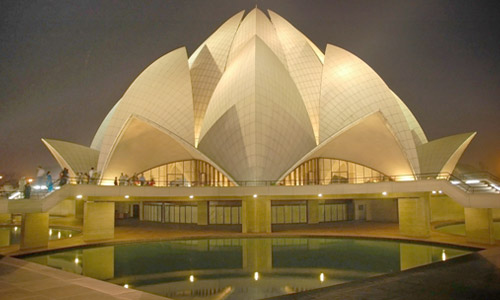
After breakfast, take a sightseeing tour of Old Delhi, visiting the majestic Red Fort, a UNESCO World Heritage Site built by Mughal Emperor Shah Jahan in the 17th century and once the principal residence of the Mughal emperors. Continue to Jama Masjid, one of India's largest mosques, commissioned by Shah Jahan and known for its grand courtyard, domes and red sandstone and marble architecture. Visit Rajghat, the memorial marking the cremation site of Mahatma Gandhi, followed by the lively and colourful market of Chandni Chowk, where you can opt for a cycle rickshaw ride. Continue through New Delhi to see President House, an important landmark of Lutyens' Delhi and the official residence of the President of India, and India Gate, the iconic war memorial built in honour of Indian soldiers who lost their lives during the First World War. Visit Birla Mandir (Laxmi Narayan Temple), dedicated to Lord Vishnu and Goddess Lakshmi, followed by Humayun's Tomb, a UNESCO World Heritage Site and an important precursor to the Mughal garden-tomb architecture later seen in the Taj Mahal. Continue to the lotus-shaped Lotus Temple, a Bahá'í House of Worship known for its distinctive flower-like design, and Qutub Minar, a UNESCO World Heritage Site begun by Qutub-ud-din Aibek of the Slave Dynasty and renowned for its soaring height and intricate Indo-Islamic architecture. Visit Sri Radha Parthasarathi Mandir, generally known as the ISKCON Delhi Temple. Later in the evening, visit the Light and Sound Show at Red Fort, presenting episodes from the long and varied history of Delhi. Afterwards return to the hotel for overnight stay.
After breakfast, check out from the hotel and drive to Agra. En route stop at Sikandra to see the Tomb of Mughal Emperor Akbar, a Mughal mausoleum known for its combination of architectural traditions. After the visit, continue to Agra. On arrival, transfer to the hotel. In the evening, if time permits, visit Oswal Emporium to see its replica of the Taj Mahal, which took 10 years for the artists to build. You can also enjoy the light and sound show Mohabbat-the-Taj: The Saga of Love, presenting the story of the Taj Mahal and the love of Shah Jahan and Mumtaz Mahal. Agra is also known for marble and soapstone inlay work, carpets, gold thread embroidery and leather shoes. Later return to the hotel for overnight stay.
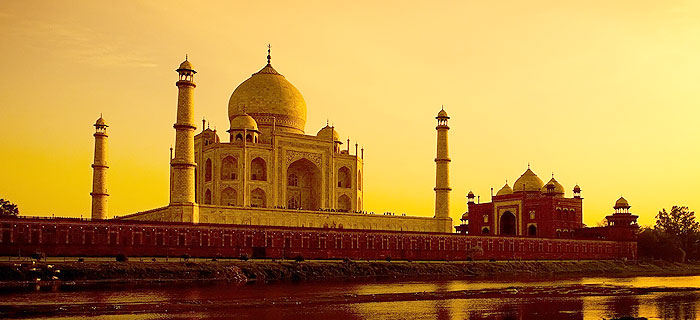
Early morning visit the Taj Mahal at sunrise. This UNESCO World Heritage Site, commissioned by Mughal Emperor Shah Jahan, is one of the world's best-known monuments and represents a fusion of diverse architectural traditions. The tour continues with Agra Fort, a UNESCO World Heritage Site built in 1576 AD by Mughal Emperor Akbar and enclosed by red sandstone walls. Within the fort see Pearl Mosque, Jahangir Mahal, Moti Masjid, Macchhi Bhawan, Nagina Masjid, Diwan-i-Khas, Sheesh Mahal, Diwan-e-Am, Meena Bazaar and Musamman Burj, where Shah Jahan was imprisoned by his son Aurangzeb and could see the Taj Mahal. Afterwards visit the Tomb of Itamad-ud-Daula, built by Empress Noor Jahan as a tribute to her father. Later return to the hotel for overnight stay.
Today morning after breakfast, check out from the hotel and drive to Jaipur. En route stop at Fatehpur Sikri, the old deserted town of the Mughal kingdom, built in red sandstone in honour of Saint Salim Chisti, who blessed Emperor Akbar with the birth of three sons. The former Mughal capital is a UNESCO World Heritage Site and is noted for its robust architecture and individual character of its major structures, including Diwan-e-Khas, Panch Mahal, the Tomb of Salim Chisti and Buland Darwaza, one of the largest and tallest gateways in the world. Also stop at Abhaneri near Jaipur to visit its historic Step Well, built by King Chanda of the Chauhan Dynasty and dedicated to Harshat Mata, Goddess of Joy and Happiness. Afterwards continue to Jaipur and transfer to the hotel for overnight stay.
Today morning after breakfast, explore the Pink City with an excursion to Amber Fort, situated just outside the city and built in the 15th century by Rajput King Man Singh. The magnificent hilltop fort combines Rajput and Mughal architectural traditions, with grand courtyards, palaces and richly decorated interiors reflecting the splendour of Jaipur's former royal capital. Enjoy an Elephant Ride ascending Amber Fort before continuing to Nahargarh Fort, set in the Aravalli hills and offering panoramic views over Jaipur. Drive back to the main city to visit the City Palace, the historic seat of Jaipur's ruling family and an important centre of the city's royal heritage. Continue to Jantar Mantar, a UNESCO World Heritage Site constructed by Maharaja Sawai Jai Singh II and renowned for its monumental astronomical instruments. Visit Hawa Mahal, also known as the Palace of Winds, and Birla Temple, known for its white marble architecture. You can also visit Amber Fort to see the Light and Sound Show, presenting the history of the citadel and the Kachhwaha dynasty before their capital moved to Jaipur. Later explore the bustling market by cycle rickshaw ride. Enjoy the evening at Chokhi Dhani, an ethnic village resort offering folk dances, puppet shows, astrology, music, camel rides and traditional Rajasthani food. Afterwards return to the hotel for overnight stay.
After breakfast, drive to Pushkar, well known for its annual cattle fair held every November with celebrations attracting visitors and traders. Visit the Brahma Temple, an important Hindu pilgrimage centre and one of the very few existing temples in India dedicated to Brahma, the Hindu creator-god. Pushkar lies in a valley beyond Nagaparvat and the Anasagar Lake and holds a special place in Hindu tradition, with the belief that Lord Brahma, together with the gods and goddesses, performed a Yagya here. Also visit the Pushkar Fair Site, located opposite Pushkar Lake. According to the Hindu scripture Padma Purana, lotus petals dropped by Brahma created three lakes: Pushkar Lake or Jyeshta Pushkar, Madya Pushkar and Kanishta Pushkar. Return to the hotel for dinner and overnight stay.
After an early breakfast, check out from the hotel and drive to Jodhpur. On arrival, transfer to the hotel and, after refreshment, take an excursion to Bishnoi Village, 25 kms and approximately 45 minutes one way. The Bishnoi villagers are regarded as guardians of animals and follow traditions of respect for living things. Visit local handicrafts including shoemakers, pottery and hand weaving, while observing men in traditional attire and women wearing ancestral silver jewellery. En route, watch and photograph wildlife such as blackbuck, chinkaras and peacocks, which are commonly seen around Bishnoi villages due to the community's traditional protection of animals. After the visit, drive back to Jodhpur. You can explore the local market and visit authentic restaurants. You may choose On the Rocks, an open-air restaurant offering Rajasthani hospitality, authentic food and folk music and dance. Later return to the hotel for overnight stay.
After breakfast, take a sightseeing tour of Jodhpur, visiting the massive Clock Tower, the imposing Mehrangarh Fort, Jaswant Thada, the mausoleum of Rajput King Jaswant Singh, and Umaid Bhawan Palace and Museum, one of India's most imposing regal palaces. Later check out and drive to Udaipur, en route halting at Ranakpur to visit the magnificent Jain Temples, built in the 15th century and renowned for their intricate marble carvings and distinctive architectural details. You may opt to enjoy lunch at Maharani Baugh, an authentic heritage hotel, at your own cost. After the visit, continue to Udaipur. On arrival, check in to the hotel. In the evening, enjoy a boat ride on Lake Pichola. You may opt to have dinner at your own cost at Lake Palace Hotel, located amidst the lake. Afterwards return to the hotel for overnight stay.
After breakfast, take a sightseeing tour of Udaipur, visiting the City Palace Complex, a major landmark and historic home of the Rajput rulers. See the Durbar Hall, Palace Museum, Crystal Gallery and Jagdish Temple, followed by Sahelion Ki Bari, a garden associated with the queens and princes of the rulers. Continue to Bharatiya Lok Kala Mandal, an ethnic exhibit of Rajasthan's traditions and culture featuring ethnic ornaments, traditional outfits, puppets, masks, dolls, classical paintings and folk musical instruments. In the evening visit Lake Bagela, 22 kms away, for a sightseeing tour of the ancient Eklingji and Nagda Temples. Udaipur was founded in 1568 AD by Rajput King Udai Singh and developed around Lake Pichola within the Aravalli mountain range. Overnight at the hotel.
After breakfast, check out from the hotel and visit Chittorgarh, home to one of India's largest historical forts. The Chittorgarh Fort stands as a reminder of the history and bravery of the Rajput clan and sprawls across around 700 acres, with historical monuments including the Vijay Stambha (Tower of Victory), Rani Padmini Palace, Man Mahal and Meera Temple. The fortified settlement has witnessed numerous sieges and preserves an extensive collection of monuments associated with Rajput history. Visit Kirti Stambha, Rana Kumbha Palace, Kumbha Shyam Temple, Kalika Mata Temple and the State Archaeological Museum. Afterwards continue to Udaipur Airport to board the scheduled flight for Delhi. On arrival, transfer to Indira Gandhi International Airport, Delhi to board the scheduled flight for your onward journey. On departure, the tour concludes with happy memories.
The final cost of a customized tour varies depending on accommodation choices, travel period, number of travellers and individual preferences. While an exact quotation can be provided upon finalization of details, the following indicative price range will help you plan your holiday (based on a minimum of two persons sharing a double room together).