01 Day: Arrival Bangalore
Welcome to the International Airport at Bangalore, our representative will assist and escort you by a car and transfer you to the pre-booked hotel. During your check in, all the required documents related to the tour, will be given to you and all your queries in concern to the tour and services will be explained. If you are arriving by early flight, after relaxation you can take a walk to have a glance of the city, visiting local markets and restaurants. Overnight at the hotel.
Bangalore: Capital of Karnataka State, Bangalore is famous as the city of gardens. It is one of the most attractive cities in India with its beautiful parks avenues and impressive buildings. Bangalore is renowned as much for its industrial plants as for its silk saris, and for the sprawling Cubbon Park, which lies at the heart of the city, as also its prestigious race course. It is now part of the great Silicone Valley, is a beautiful city filled with the tranquillity of its greenery. The Lalbagh garden is particularly beauliful and well laid out.
02 Day: Bangalore – Puttaparthi (155 kms: 4 hrs)
Today morning, after breakfast check out the hotel, and drive to Puttaparthi, on arrival transfer to the hotel, after refreshment visit, Sri Sathya Sai Space Theatre, The museum houses collections of various artifacts that depict Sai Baba’s life since the time he was a child. Anjaneya Hanuman Swamy Temple, This temple is situated at the Gopuram road. A marvelous Shiva Lingam adorns the entrance of the temple. Sai Baba had brought this Shiva Lingam from Kasim. Evening visit Chitravathi River is considered as new Ganges by the devotees of Sai Baba. The river gains the status of being sacred as Sai Baba used to bathe in the river. The banks of the river were where Sai Baba played many miracles. Afterwards return to the hotel for dinner and overnight stay.
Puttaparthi, The place is popularly known by the world at large as the birthplace of Sri Sri Sathya Sai Baba. Venerated as a reincarnation of the Shirdi Sai Baba, a mystic saint who lived in the beginning of the 20th century, this Sai Baba has a large following worldwide and is a pilgrimage centre for devotees. His ability to produce ash or 'vibhuti' out of thin air added much to the god-like stature he enjoys amongst his devotees.
03 Day: Puttaparthi – Bangalore (155 kms: 4 hrs)
Today morning, after breakfast check out the hotel, and drive to Bangalore, on arrival transfer to the hotel, after refreshment take a sightseeing tour of the city visiting ISKCON Temple, Hare Krishna Hill is the Hill on which this temple is situated. Lal Baugh– One of the main gardens in the city; Cubbon Park– a garden laid down by Lord Cubbon in 1864. The Bull Temple – The 4.57 m high and 6.10 meters long image is carved out of single granite rock. Later followed by visit to Sri Gavi Gangadhareshwara Temple– The temple is natural monolith carved cave temple dedicated to Lord Shiva. Also visit, Vishweshwaraiah Technological Museum, Vidhana Soudha. In the evening you can visit Ulsoor Lake. Overnight stay at the hotel.
04 Day: Bangalore – Srirangapatnam – Mysore (140 kms: 4 hrs)
After an early breakfast check out the hotel and drive to Mysore. Enroute visit the Srirangapatnam (20 kms from Mysore) to visit Fort and Sri Ranganathaswami Temple. After sightseeing continues drive to Mysore, on arrival transfer to the hotel, Mysore is the Sandalwood and Incense Capital of the World & some of India’s finest Crafts, such as Printed Silk, Inlaid, Furniture and Ivory Carvings are also found here. Also known as the City of Palaces, Mysore retains a quaint charm that never fails to enchant. After relaxation take a sightseeing tour of the city visiting Brindavan gardens & spectacular musical fountains, followed by flower and sandal wood market, handicraft museum. Overnight stay at the hotel.
Srirangapatna (Srirangapatnam) is an island town on the Bangalore-Mysore Highway The town obtained its name from a 1000 year old temple of Lord Sriranganatha. This history-rich town was the capital of Hyder Ali and his son Tipu Sultan - The Tiger of Mysore. Tipu Sultan, the eldest son of Haider Ali, was born on December 10, 1750 at Devanhalli. On his father's death in 1782, Tipu Sultan assumed power in Mysore. He continued fighting the British and defeated them in 1783.
05 Day: Mysore
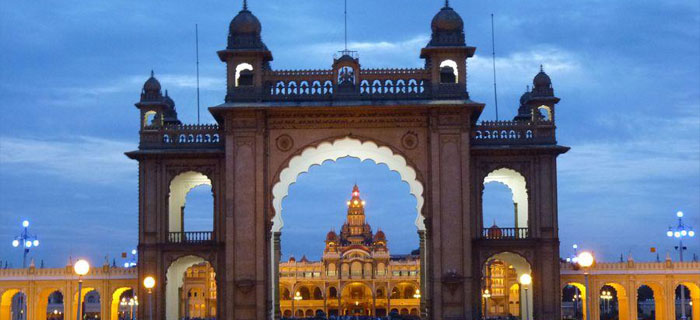
After breakfast visit the Palace of the Maharaja (Emperor) built in 1911 – 1912. The palace is a harmonious synthesis of the Hindu and saracenic styles of architecture with magnificent archways, domes, turrets, colonnades and sculptures. Also visit the St. Philomenas cathedral followed by a drive up to Chamundi hill to see Chamundeshwari Temple and a panoramic view of Mysore. On the way back, see the Nandi Bull. Evening is free for leisure, or you may opt to visit to the local market to enjoy the local food, offered by various restaurants. Overnight stay at the hotel.
Mysore, the capital city of the Wodeyars has always enchanted its admirers with its quaint charm, rich heritage, magnificent palaces, beautifully laid-out gardens, imposing buildings, broad shady avenues and sacred temples. Mysore races its history back to the mythical past, when Goddess Chamundeshwari of Chamundi Hills killed the wicked buffalo-headed demon, Mahishasura. Mysore Dasara is the celebration of this victory of good over evil.
06 Day: Mysore – Shravanabelagola– Hassan (200 kms: 5 ½ hrs)
After breakfast check out from the hotel and drive to Hassan. En route you can enjoy the splendour of Shravanabelagola- one of most important Jain Pilgrim centre. Drive through the picturesque hilly landscape and stopover in Halebid, which is the ancient capital of Hoysala Empire. In Halebid you will visit the Hoysalesvara Temple of 12th century where you see half-life size statues of Hindu deities, with minute details of each, all around the temple. At Belur we visit the group of Chennakesava Temples, which are famous for its architecture and sculptures. After visit continue drive to Hassan, and check in to the hotel for overnight stay.
Sravanabelgola: 51 kms southeast of Hassan, it is one of the most important Jain pilgrim centres & houses the world's tallest monolithic statue of Lord Bahubali standing tall at 27 meters. Thousands of devotees congregate here to perform the Mahamastakabhisheka a spectacular ceremony held once in 12 years, when the 1000 year old statue is anointed with milk, curds, ghee, saffron, and gold coins. Channarayapatna, Ramanathpur, Gorur and Manjarabad are the other places of interest around Hassan.
Halebid is 27 kms northwest of Hassan and 17 kms east of Belur. The temples of Halebid – like those of Belur – bear mute testimony to the rich, cultural heritage of Karnataka. The Hoysaleshwara Temple, dating back to the 21st century, is astounding for its wealth of sculpture details. The walls of the temple are covered with an endless variety of Gods and Goddesses, animals, birds and dancing girls.
Belur, this quaint hamlet – 38 kms from Hassan – is located on the banks of the river Yagachi. It was once capital of the Hoysala Empire, today made unforgettable for its exquisite temples. The Shennakeshava temple is one of the finest examples of Hoysala architecture. It took 103 years to complete this architectural marvel. Elephants, episodes from mythology & sensual dancers - you will find it all in the awe–inspiring & intricate workmanship with Hand–lathe–turned filigreed pillars supporting the temple.
07 Day: Hassan – Udupi (225 kms: 6 hrs)
Morning breakfast check out from the hotel and drive to Udupi. On arrival check in to the hotel, today you can visit the local souvenir markets and nearby temple. Opt to visit the local restaurant to enjoy the famous cuisines of Udupi “Masala Dosa” kind of dish prepared from Vegetables and wrapped in specially prepared very thin rice bread which is o be eaten with a curry name Sambar. In the evening drive towards Malpe, about 6 kms from Udupi. Kaup Beach, a must visit beach in the area, this might just be one of the most beautiful destinations of the town. Also find here a lighthouse, twinkling at a height of 100 ft. Overnight stay at Udupi.
Udupi an important coastal town in Karnataka India is located 381 kms from the capital Bangalore. The urban focus of Udupi is an open square surrounded by temples and mutts. Udupi is the birth place of the 12th century saint Madhava, who set up eight sanyasi mutts in the town and is one of Karnataka's most important south Indian pilgrimage sites. Udupi is also known for its delicious cuisine. Udupi is also known as Shivali - or Shiva belli. According to a legend it is said that, Parasurama for reclaiming land from the sea, crowned his devotee Ramabhoja as a ruler. Ramabhoja created a silver peetham with a snake carved on it, installed Parasurama in the linga swaroopam and worshipped him as Ananteswara.
08 Day: Udupi
After breakfast take a city sightseeing tour visiting Ananteswara temple, the main attraction of this temple is the 'Kanakana kindi'- a small window through which Krishna is believed to have given darshan to his devotee, Kanakadasa, a saint-minstrel. Also visit the Balakrishna temple which enshrines an image of Krishna believed to have been made by the divine architect Viswakarma. Manipal, 3 kms from Udupi, which is a centre of modern learning with well known medical and engineering colleges. MGM college here has an institute of Yakshgana a unique dance drama indigenous to the two districts. After visit drive back to Udupi hotel for overnight stay.
09 Day: Udupi – Sringeri – Chitradurga (285 kms: 6 - 7 hrs)
After breakfast check out the hotel and drive to Chitradurga, enroute visit Sringeri 86 kms from Udupi, It is the site of the first maṭha (Sringeri Sharada Peeta) established by Adi Shankara, Sringeri and Vidyashankara Temple, a perfect example of South Indian as well as Vijayanagara styles of architecture, this temple is dedicated to the pontiff Vidyashankara. After visit continue drive to Chitradurga, on arrival transfer to the hotel for overnight stay.
Chitradurga is an administrative district of Karnataka state in southern India. The city of Chitradurga is the district headquarters. Chitradurga gets its name from Chitrakaldurga, an umbrella-shaped lofty hill found there. Tradition dates Chitradurga District to the period of the Ramayana and Mahabharata. The whole district lies in the valley of the Vedavati River, with the Tungabhadra River flowing in the northwest. During the British times it was named Chitaldrug.
Sringeri is one of the most celebrated pilgrimage centers in Karnataka, and is home to the Sarada Peetham established by the revered spiritual leader Aadi Sankaracharya. Sringeri is located amidst the Sahyadri hills in Chikmaglur district of Karnataka on the left bank of the river Tungabhadra. The nearest railhead is Birur on the Bangalore - Pune railroad. The nearest airport is at Mangalore (150 km).
10 Day: Chitradurga – Hospet (135 kms: 3 hrs)
After breakfast take sightseeing tour of Chitradurga Kote is only of its kind of fort. As it is built on top of Hill with Stones, Ashoka Siddapura is an important archeological site where emperor Ashoka's edits were found. Nearby is Ramagiri, a hillock that has mythical associations with the epic Ramayana. Chitradurga Fort is built on the north-eastern base of the rocky hills of Giridurga, located around 1 km away from the main city of Chitradurga. Chandravalli is an ancient archeological site where painted pottery and coins from the Shatavahana empire and prehistoric times were discovered, located along the north-easterly axis of Chitradurga hill, about 2 km from the main city. Afterwards check out the hotel and drive to Hospet, on arrival transfer to the hotel for overnight stay.
11 Day: Hospet – Hampi – Hospet (Excursion: 13 kms ½ hrs)
Early morning trek up to sunrise point on Matanga Hill, which is to the east of Hampi ... It’s beautiful and not to be missed if you ever visit Hampi. Return to the hotel for breakfast later take an excursion to Hampi, Hampi the once beautiful capital city of Vijaynagar Empire was greater than Rome and had palaces; visit at some of the interesting ruins remaining Hazara Rama Temples, huge Ganesha & Narasimha images, the elephant stables, the queen's bath, and carvings on the Ramachandra Temple & Lotus Mahal. There are a number of temples in Anegondi, which is a fortified area on the northern side of Hampi Bazaar. A terrain such as this was excellent for a capital city that needed to be vigilant and spend a further day in the heart of the lost empire. Overnight stay at the hotel.
Hampi was once the glorious capital of mighty Vijayanagar Empire (1336-1565), from the Deccan Plateau to the tip of the Peninsula. Founded in the middle of the 14th century by two local princes, Hukka & Bukka, the Vijayanagara Empire came to be celebrated for its might and wealth and as a showpiece of imperial magnificence. The emperors of this dynasty were great patrons of art and architecture, which can still be seen in the vast ruins of Hampi. In an effort to resurrect this abandoned capital, the government has been involved in the restoration, excavation and protection of the ruins which spread over an area of 26 sq. kms.
12 Day: Hospet – Aihole / Pattadakal – Badami (170 kms: 4 hrs)
After breakfast check out from the hotel and drive to Badami enroute visit Aihole and Pattadakal. Aihole is the cradle of stone temple architecture of the southern Dravidian School. The oldest temple, Lad Khan goes back to the 5th century A.D. There are 70 temples in this group. The Durga temple is noted for its sculptures. The Meguti temple is built of 630 small stone blocks. The Ravanaphadi Cave has some beautiful carvings. Pattadakal, referred to as Petrigal, reached its pinnacle of glory under the Chalukya kings from 7th to 9th centuries. The oldest in this group is the Sanghameswara Temple. The Mallikarjuna Temple has pillars depicting life of Krishna. Virupaksha temple has sculptures and panel scenes from the epics, the Ramayana and Mahabharata. The Papanatha Temple has impressive carvings on pillars and ceiling. After sightseeing, proceed to Badami. On arrival transfer to the hotel for overnight stay.
Aihole, A tranquil village on the banks of the Malaprabha river, Aihole is acclaimed as the cradle of Hindu temple architecture. There are hundreds of temples in the villages and fields nearby. The most impressive one is the Durga Temple with its semicircular apse, elevated plinth, and the gallery encircling the sanctum. The Lad Khan Temple, which is one of the earliest temples, was originally a royal assembly hall and marriage mantapa chosen as the abode of a Muslim prince, Lad Khan.
Pattadakal, with its beautifully chiselled temples, this World Heritage Site on the banks of the Malaprabha River bears testimony to the richness of Chalukyan architecture. Pattadakal reached its pinnacle of glory under the Chalukya kings and was once used as a ceremonial centre where kings were crowned and commemorated. It has a cluster of 10 major temples, each displaying interesting architectural features. At the entrance of the site, you can see the 8th century temples of Jambulinga, Kadasiddeshvara, and Galaganatha with their curvilinear shikaras or spires.
13 Day: Badami
After breakfast take a sightseeing trip of Badami. Climb a flight of steps to reach the ancient caves - all hewn out o sand stone on the precipice of a hill. There are four caves here. The first three belong to the Vedic faith and the fourth cave is the only Jain Temple in Badami. The first cave temple - past Shiva's door Keepers - and there he is the eighteen-armed Nataraj striking 81 dance poses. The largest and most ornamental is the third Cave temple dedicated to Vishnu. Here are some splendid carvings of the Hindu Pantheon, Narasimha - the half man and half lion avatar of Vishnu, Hari Hara, the composite god who is half Shiva a half – Vishnu. Overnight stay at the hotel.
Badami: The capital of the early Chalukyas, Badami is picturesquely situated at the mouth of a ravine between two rocky hills. It has four rock-cut cave temples, the largest being the third cave dedicated to Vishnu. Overlooking the temples is a reservoir, its banks dotted with temples dedicated to Vishnu and Shiva. The Bhutanatha Temples and the Museum set up by the Archeological Survey of India, are the other attractions.
14 Day: Badami – Gokarna (250 kms: 6 hrs)
After breakfast check out hotel and drive to Gokarna on arrival transfer to the hotel. Rest of the evening is free for leisure, optionally visit walk through somnolent one-street town consisting almost entirely of wooden houses. Overnight stay at the hotel.
Gokarna situated in coastal Karnataka is 453 kms from Bangalore and about 55 kms from Karwar, the District headquarters. It is described as a Shaiva Centre, as important as Kashi and Rameshwar. History has it that the Atmalinga brought by Ravana got struck here and his efforts to extricate it resulted in his throwing the coverings of the Linga to Dhareshwar, Gunavanteshwara, Murdeshwar and Shejjeshwar temples (the last places is very near Karwar). The Mahabaleshwara is one of the major temples here.
15 Day: Gokarna
Today morning after breakfast visit The Mahabaleshwara is one of the major temples here, Murdeshwar and Shejjeshwar temples (near to Karwar), later visit to Kudle beach – a 1 km long stretch of white sand fringed by palm trees – is the nearest – just about 20 minutes' walk from Gokarna. Half an hour further from Kudle is the Om beach, so named because it's shaped like the auspicious ‘Om’ symbol. Gokarna's other beaches- Paradise and Half-Moon- are smaller and lesser known, but equally great for sunbathing and swimming. Return to the hotel for overnight stay.
16 Day: Gokarna – Goa (145 kms: 4 hrs)
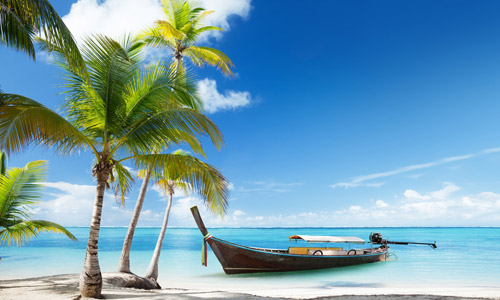
Morning after breakfast check out from the hotel and drive to Goa. On Arrival transfer to the beach resort. After relaxation enjoy the beach activities at Goa: Swaying palms, white sands and sparkling waters: the three essential elements that attract 2 million visitors annually to Goa’s balmy shores are plentiful in this tiny, glorious slice of India hugging the country’s western coastline and bounded by the Arabian Sea. Overnight stay at the beach hotel at Goa.
Goa: A Portuguese explorer, Afonso de Albuquerque sailed up the river Mandovi, defeated the Bijapuri army and rode into the capital triumphantly bearing a Portuguese Standard in one hand, and a Gold Crucifix in the other. A curious blending of cultures took place, affecting every sphere of Goa life, from religion to architecture, cuisine to art. The chapter of Goa's history ended 451 years later when Goa ceased to be a Portuguese colony, and became a part of the Indian Union.
17 Day: Goa
After breakfast, the day is free to enjoy the beaches and amenities available at the resort. You can take a sightseeing tour of Old Goa - 10 km from Panjim, the basilica of Bom Jesus, and the 16th century church dedicated to infant Jesus and enshrining the mortal remains of St. Francis Xavier, is one of the most important sight of Goa. The other Churches in the same area are St. Cathedral & Fort Aguada, with its vaulted interior, Church of our Lady of Rosary and Nunnery of St. Monica. Evening is free for leisure. Overnight stay at the resort.
18 Day: Goa
Today after breakfast day is free for individual activities and enjoy the beaches and sport activities in Goa: (on your own). Overnight stay at the resort.
19 Day: Goa – Hometown (By Air)
After breakfast check out the hotel and drive to the airport to board the scheduled flight for Hometown. Tour concludes here with happy memories.
Since the precise cost of a customized tour is subject to specific accommodation choices, travel period (date/month/year), nos of pax travelling together and other custom preferences. However, to enable you to chalk out your holiday plan, we suggest following budget guidelines (minimum 2 people are travelling together & sharing one double room) for a customized tour:


Design your tour with our expertise Plan My Trip