01 Day: Arrival Mumbai
Welcome at Chhatrapati Shivaji International Airport Mumbai, our representative assist and escort you by a/c car and transfer to the pre-booked hotel. After check in, you will be given all the required documents related to your tour plan; he will explain all your queries about the entire tour plan. Evening is free for leisure and individual activities. Overnight stay at the hotel.
Mumbai is a cluster of Seven Islands and derives its name from Mumba Devi, the patron goddess of the koli fisher folk, its oldest inhabitants. Mumbai pulsates with activity. It is a city that is disciplined by nos time frame neither day nor night. It is also the country's financial powerhouse, the nation's industrial heartland, and its economic nerve center. Dazzling shopping arcades, exciting sport activity, nightclubs & discotheques, theatre & music, gourmet restaurants and interesting sightseeing. It offers visitors a heady mix of all this and more.
02 Day: Mumbai
Today morning after breakfast take a sightseeing tour of Mumbai city, firstly visit to Gateway of India and cruise by motorboats to Elephanta Caves - ancient rock cut caves dedicated to Lord Shiva. Later cruise back Gate Way of India. And sightseeing continue visiting Prince of Wales Museum- A heritage museum exhibits ancient artifacts. Parliament house- (From outside), Nariman Point- Commercial Hub, Marine Drive- a most beautiful laid boulevards of the city. Dhobhi Ghat- a famous open air laundry, Mani Bhawan- Known also Gandhi Bhawan. Later return to the hotel. If time permits visit to Bandra and Juhu area where bollywood celebrity houses are located like Shahrukh Khan, Amitabh Bachchan, Salman Khan etc, (can be seen from outside). In the evening, visit Iskcon Temple: dedicated to Lord Krishna, The architectural splendour of the ISKCON Temple is adorned with murals and sculptures. After visit return to the hotel for overnight stay.
Note: Elephanta Caves and Prince of Wales museum are closed on every Monday.
03 Day: Mumbai – Aurangabad (By Air) – Ajanta (Excursion 105 kms: 2 hrs)
After breakfast, check out from the hotel and drive to the airport to board the schedule flight for Aurangabad. On arrival transfer to the hotel. After refreshment take an excursion to the famous Ajanta caves. Ajanta is one of the few historical and architectural marvels of India. Recognized as the World Heritage Site today. Ajanta’s wondrous cave temples are cut into the rocky sides of a dramatic crescent-shaped gorge, at the head of which is a waterfall that drops over the mountain rim in a series of seven steps to a pool far below –deep inside the mountain are the Buddhist chaitya – vihara prayer and monastery caves. After visit return to the hotel for overnight stay.
Note: The Ajanta Caves are closed to public on all Monday.
Ajanta: It was only in the 19th century, that the Ajanta group of caves, lying deep within the Sahyadri hills, cut into the curved mountain side, above the Waghora river, were discovered. A group of British officers on a tiger hunt, stumbled on these ancient works of art. They depict the story of Buddhism, spanning the period from 200 BC to 650 AD. The 29 caves were built as secluded retreats of the Buddhist monks, who taught and performed rituals in the Chaityas and Viharas, the ancient seats of learning, and nerve - centers of the Buddhist cultural movement
04 Day: Aurangabad – Ellora (Excursion 30 kms: ½ hr)
After breakfast take an excursion to Ellora, one of the highly visited World heritage sites of India. It houses 34 monasteries and temples with some exclusive uninterrupted sequence of monuments that date back from 600 to 1000 AD. The temples of Ellora are dedicated to Brahmanism, Jainism, and Buddhism. It also has some of the excellent stonework depicting the legends related to Lord Shiva. After lunch (on your own) take a short sightseeing tour of visiting: Daulatabad also known as Devagiri, is a town which includes the Devagiri-Daulatabad fort. Chand Minar in Daulatabad, situated about 15 km from Aurangabad, is an outstanding example of Islamic art. Ala-ud-din Bahmani built this minaret in 1445 to celebrate his occupation of the area. Bibi ka Maqbara built by Azam Shah in 1678, the Bibi ka Maqbara is a son's loving tribute to his mother, Begum Rabia Durrani: Panchakki - An engineering feat of the time is the Panchakki, or the water mill built by Malik Ambar in 1695. The water, channeled from a spring on a distant hill was used to power the flourmill and grind grain for the pilgrims. Overnight stay at the hotel.
Ellora: The Ellora caves, 34 in number, are carved into the sides of a basaltic hill, 30 kms from Aurangabad. The finest specimens of cave - temple architecture, they house elaborate facades and exquisitely adorned interiors. These structures representing the three faiths of Hinduism, Buddhism and Jainism, were carved during the 350 AD to 700 AD period. The 12 caves to the south are Buddhist, the 17 in the centre dedicated to Hinduism, and the 5 caves to the north are Jain.
Note: The Ellora caves are closed to public on Tuesday.
05 Day: Aurangabad – Goa (By Air)
After breakfast, check out the hotel and transfer to the airport, to board the schedule flight for Goa, assistance on arrival and transfer to the pre-booked resort. After relaxation enjoy the beach activities at Goa: (on your own) Swaying palms, white sand and sparkling waters: the three essential elements that attract 2 million visitors annually to Goa’s balmy shores are plentiful in this tiny, glorious slice of India hugging the country’s western coastline and bounded by the Arabian Sea. Overnight stay at the resort.
Goa, a Portuguese explorer, Afonso de Albuquerque sailed up the river Mandovi defeated the Bijapur army and rode into the capital triumphantly bearing a Portuguese Standard in one hand, and a Gold Crucifix in the other. A curious blending of cultures took place, affecting every sphere of Goa life, from religion to architecture, cuisine to art. The chapter of Goa's history ended 451 years later when Goa ceased to be a Portuguese colony, and became a part of the Indian Union. Parasailing, yachting, windsurfing, and deep sea diving are some of the more popular water sports, facilities for which are available.
06 Day: Goa
After breakfast, the day is free to enjoy the beaches and amenities available at the resort. You can take a sightseeing tour of Old Goa - 10 km from Panjim, the basilica of Bom Jesus, and the 16th century church dedicated to infant Jesus and enshrining the mortal remains of St. Francis Xavier, is one of the most important sight of Goa. The other Churches in the same area are St. Cathedral & Fort Aguada, with its vaulted interior, Church of our Lady of Rosary and Nunnery of St. Monica. Evening is free for leisure. Overnight stay at the resort.
07 Day: Goa
Today after breakfast day is free for individual activities and enjoy the beaches and sport activities in Goa: (on your own). Overnight stay at the resort.
08 Day: Goa – Delhi (By Air)
Today morning after breakfast, check out the hotel and transfer to the domestic airport to board the scheduled flight for Delhi, assistance on arrival and transfer to the hotel. After relaxation day is free for shopping, shopping in Delhi can be utterly extravagant, or amazingly inexpensive. India’s capital city is among the most exciting places to buy textiles (fabric as well as ready to wear clothes), jewellery, shoes, bags, leather, carpets, handicrafts, traditional and contemporary Indian art and curios. Several leading designers have boutiques and showrooms in Delhi. Explore the Chandni Chowk wholesale market, and search for handicrafts at Dilli Haat. Connaught Place has been one of Delhi's most popular shopping venues since 1931. In the evening witness Light and Sound show at Red fort. The show projects splendid history of 5000 years old city, a truly memorable experience. Return to the hotel for overnight stay.
Light and Sound Show: An extravagant sound and light show at the Red Fort, makes the 5,000 years old narration of the city come alive. Amidst the harmony of the fabulous panoramic and historic vicinity of the Red Fort, selected occurrence from the archives of Delhi's historic and legendary precedent are colorfully brought to life. To make this show an emotively unforgettable experience, the special effects are combined with the unique ambience.
Delhi, capital city of the Federal Republic of India. It is one of India's fastest growing cities. It has sprawled over the West Bank of the river Yamuna, straddling the river. Delhi blends an historic past and a vibrant present. Delhi has some of the finest museums in the country. New Delhi was proclaimed the capital of India by the British architect Sir Edwin Lutyens (1869-1944) & is tree-lined & spacious. Legend has it that the Pandavas, the august heroes of the epic Mahabharata, originally founded Delhi, then called Indraprastha, around 1200 B.C. Present day Delhi is built around the ruins of seven ancient cities.
09 Day: Delhi
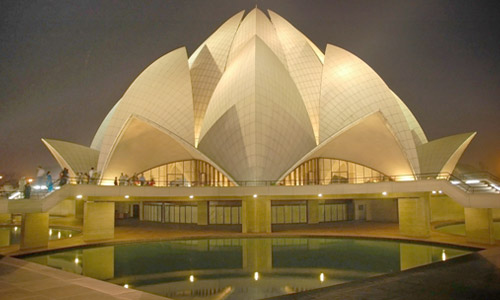
After breakfast, take a sightseeing tour of Old Delhi: the majestic Red Fort, a marvel in red sandstone, Jama Masjid, the largest and most splendid mosque in India, Rajghat, the memorial of Mahatma Gandhi, where he was cremated. The sightseeing continues to explore New Delhi including President House, India gate; built to honour and pay a tribute to the Indian soldiers who sacrificed themselves during the Afghan war, Birla Mandir (Laxmi Narayan Temple), Humayun’s Tomb, lotus shaped Bhai’s Temple, Qutub Minar; built by Qutub-ud-din Aibek of the Slave Dynasty. Sri Radha Parthasarathi Mandir, generally known as the ISKCON Delhi temple. Also you can opt for a cycle rickshaw ride through the lively and colourful market of Chandani Chowk. Later return to the hotel for overnight stay.
10 Day: Delhi – Udaipur (By Air)
After breakfast check out from the hotel and transfer to the airport to board the scheduled flight for Udaipur. On arrival transfer to the hotel, after relaxation, take a sightseeing tour of Udaipur visiting wondrous City Palace complex, significant landmark of the town, the palace is a splendid white marble architectural historical place of Rajpoot Rulers, in the palace vicinity you will see notable places like Durbar Hall, Palace Museum, Crystal Gallery and Jagdish temple, followed by Sahelion Ki Bari, a beautiful recreation garden for queens and princes of the rulers. Bharatiya Lok Kala Mandal, an ethic places to see the traditions and culture of Rajasthan, ethnic ornaments, exhibiting folk traditional outfits, puppets, masks, dolls, classical paintings, fold musical instruments. In the evening visit to Lake Bageela 22 kms for sightseeing tour of ancient Eklingji and Nagda Temples, return to the hotel for overnight stay.
Udaipur: One of the most romantic and beautiful city of North India, the city was founded in 1568 AD by Rajpoot King Udai Singh., located on the banks of the shimmering Pichola Lake, is one of the most idealistic city of Rajasthan. Udaipur is cuddle up in lush green Aravali mountain range. The city is also known as the ‘Venice of the East'. It is a kaleidoscope of wonderful lakes, enchanting temples, lake side gardens, amazing forts and palaces and narrow lanes of the old city with historical past, Udaipur characterize chivalry and velour of the Rajpoot clan who had ruled this city for years and valor and chivalry. There are so amazing places to visit in this incredible city of Rajasthan.
11 Day: Udaipur – Chittorgarh – Udaipur (Excursion: 120 kms: 2 1/2 hrs: One way)
After breakfast take an excursion Chittorgarh city, to visit mightiest and largest historical fort of India: the fort houses historical monuments: Tower of Victory, Rani Padmini Palace, Man Mahal, Mira Temple and several ruins of temples of Shiva. Afterwards drive back to Udaipur. After relaxation during spend quality time with a boat ride at beautiful Lake Pichola, you may opt dinner (of your own) at the most famous and heritage luxury hotel Taj Lake Palace, formally the palace for the regal guests of the Royal family of Udaipur, located at amidst at the lake Pichola. Afterwards return to Udaipur for overnight stay.
Chittorgarh, is the epitome of Rajput pride, romance and spirit. It reverberates with history of heroism and sacrifice, which is evident as it echoes with the tales sung by the Bards of Rajasthan. The main reason for visiting Chittorgarh is its massive hilltop fort, which is a depiction of Rajput culture and values. The fort stands on a 240-hectares site on a 180m high hill that rises rapidly from the plains below.
12 Day: Udaipur – Ranakpur – Jodhpur (245 kms: 6 hrs)
After breakfast, check out the hotel and drive to Jodhpur, enroute take a halt at Ranakpur to visit the ancient Jain Temples, built in the 12th Century. Enjoy lunch at Maharani Baugh, (on your own) one of the best hotels in Ranakpur. After visit proceed to Jodhpur, on arrival transfer to the hotel. After refreshment if time permits take an excursion to Bishnoi Village 25 kms: 45 min one way. Visit to the local handicrafts viz shoe makers, pottery hand weaving watching men in their traditional attire, women clad with ancestral silver Jewellery, en-route watch and photograph the beautiful wildlife - black buck, chinkaras, peacock etc. liberally moving in plenty of care by the local villagers. After visit drive back to Jodhpur you can explore the local market, visiting various authentic restaurants. You may choose ‘On the rocks’ an open air restaurants with Rajasthani hospitality, offering authentic food and folk music and dance. Afterwards return to the hotel for overnight stay.
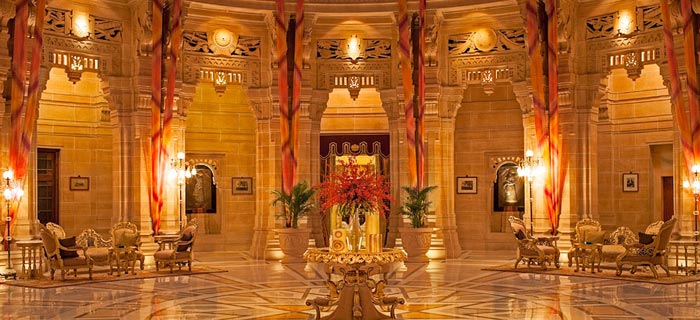
Jodhpur: The home of Rajpoot, (Rathors) – The awesome significant city of Rajasthan. Founded in 1459 A.D. by Rao Jodha, today Jodhpur is one of the largest and flourishing city of Rajasthan. Known as white city of Rajasthan. Jodhpur was once upon a time was the capital of Marwar state (Northern Part of Rajasthan). Mehrangarh fort, the crowning old palace is major tourist attraction of Jodhpur. Another pride of Jodhpur is Umaid Bhawan Palace; this grand palace is now converted into heritage hotel and present residence of the Royal family of Jodhpur.
13 Day: Jodhpur – Pushkar – Jaipur (335 kms: 7 hrs)
After breakfast take a sightseeing tour of Jodhpur including Clock Tower, Mehrangarh Fort situated at an altitude of about 125 meters and is spread over an area of 5 sq. km and it has seven gates, Jaswant Thada is a white marble memorial built in memory of Maharaja Jaswant Singh, followed by visit to Umaid Bhawan Palace which is a majestic Palace building that presently functions as a hotel and museum. After lunch, drive to Jaipur. En route visit Pushkar, the known destination of world fame cattle faire, the only Temple of Lord Brahma on the bank of Pushkar Lake surrounded by the Ghats and one can see devotees praying and taking a dip in the holy water of Pushkar Lake, after visit proceed to Jaipur, on arrival transfer to the hotel for overnight stay.
Pushkar: Amongst the grandeur of Rajasthan, discover a unique gem - Pushkar. Lord Brahma - The creator of the world in a search for his abode on earth, performed the supremely spiritual Vedic yagna at Pushkar. It is thus the site of the only Brahma Temple in the world. A city of Pilgrimage from time immemorial with over 500 temples and ghats Pushkar begets a legacy of timeless architectural heritage. Pushkar radiates an ambience of peace and spirituality that casts a lure to visit again and again.
14 Day: Jaipur
Today morning after breakfast explore the Pink City with an excursion to splendid Amber Fort, situated just outside the city. Visit another mighty and majestic Nagargarh fort, close to Amber fort. Drive back to the main city to visit the imperial City Palace - present residence of the royal family of Jaipur. The incredible Jantar Mantar was innovated and constructed by Jaipur King Swai Jai Singh. The splendid Hawa Mahal, also known ‘Palace of Winds’. Explore modern & artistic, Birla Temple, with its white shimmering marble glittering in the night. Visit to Amber fort to see the Light and Sound Show: holds the history of a citadel, pulsating with a legendry past of 600 years & 28 kings of the Kachhwaha dynasty, before their capital moved to Jaipur. Through their unique diplomacy of strategic alliances & their valour & strength. You can explore the bustling market by hoping onto a cycle rickshaw ride. Also enjoy your evening at the most authentic and ethnic village resort: called Chokhi Dhani, designed on the theme of an ethnic village of Rajasthan with lots of traditional environment with entertainment like folk dances, puppet shows, astrology, music, camel ride, Here you can enjoy the traditional Rajasthani food. Drive back to hotel for overnight stay at Jaipur.
Jaipur widely known as the ‘Pink City. This city is color washed pink to welcome Prince Albert, the consort of Queen Victoria of England who visited India in 1883 A.D. The city was founded in 1727 A.D by one of the greatest ruler Jai Singh II. Jaipur is surrounded by hills on three sides, crowned by formidable forts and majestic palaces, mansions and gardens. Jaipur is the only city in the world, which is sub-divided in to nine rectangular sectors symbolizing nine divisions of universe. Jaipur is the first planned city designed in accordance with ‘Shilpa Shastra’- epochal treatise of Hindu architecture.
15 Day: Jaipur – Fatehpur Sikri – Agra (240 kms: 6 hrs)
Today morning after breakfast check out the hotel and drive to Agra. Enroute stop over at Fatehpur Sikri, the old deserted town of the Mughal kingdom, built in red sandstone in honour of Saint Salim Chisti who blessed birth of 3 sons to Emperor Akbar. Notable among them is the Diwane e Khas; Punch Mahal, the Tomb of Salim Chisti, and the Buland Darwaza, one of the largest and tallest gateways in the world. After visit… proceed to Agra, on arrival transfer to the hotel. In the evening one should visit Oswal Emporium to watch the replica of Taj Mahal it took 10 years for the artists to build this artistic epitome, also enjoy light and sound show “Mohabbat-the-Taj: the saga of love”, the only show of its kind in India! Return to the hotel for overnight stay.
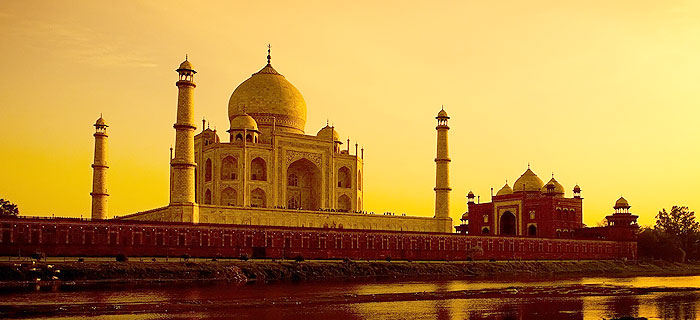
Agra is famous as being home to one of the Seven Wonders of the World-the Taj Mahal. Built by the great Mughal emperor Shahjahan, this is an eternal love story written on the shimmering marble for his wife Mumtaz. Agra is pleasant town with comparatively slow pace, Agra is known for its superb inlay work on marble and soapstone by craftsmen who are descendant of those who worked under the Mughals. The city is also famous for its carpets, gold thread embroidery and leather shoes. Agra, and the nearby city of Fatehpur Sikri, is conveniently close to Delhi. Besides the Taj Mahal is Agra Fort, Sikandra, -Ud-Daulah-35 kms away are the imperial ruins of the Mughal city, Fatehpur Sikri.
16 Day: Agra – Varanasi (By Train)
Today early morning after breakfast, visit world’s most popular and beautiful monument: Taj Mahal with its’ fabulous view at the time of sunrise. The tour continues with a visit to Agra Fort. The fort was built in 1576 AD by great Mughal Emperor Akbar, structured and designed with red stoned barricaded; here you will find the splendid Pearl Mosque and various other classic example of art: Jahangir Mahal, Moti Masjid, Macchhi Bhawan, Nagina Masjid, Diwan-i-Khas, Sheesh Mahal, Diwan-e-Am, and Meena Bazaar. Emperor Shahjahan imprisoned by his rebellious son Aurangzeb in the Musamman Bhurj, would see his love reflecting through the Taj Mahal, where his dear wife was cremated. Also visit the Tomb of Itamad-ud-Daula, 35 kms from Agra, built by Empress Noorjahan daughter of Shahjahan, this monument a tribute to her great father. After sightseeing transfer to the Agra Railway Station to board the evening train from Agra to Varanasi, overnight at the board.
Note: Taj Mahal is closed on every Friday.
Varanasi: Sandwiched between the rivers Varuna and Ashi as they join the Ganges, Varanasi takes its name from its location. It is also called Kashi, the city of light, but the British, in an endeavor to simplify matters, had coined their own name for the place—Benaras. Varanasi is the city of a thousand temples. The main object of all devotees is the Kasi Vishwanath Temple. According to Hindu belief, Benaras or Varanasi as it is known is the cosmic center of the Universe. The renowned American novelist Mark Twain once wrote, "Benaras is older than history, older than tradition, older even than legend and looks twice as old as all of them put together.
17 Day: Varanasi
Assistance on arrival at Varanasi Railway Station and transfer to the hotel. After relaxation take an excursion to Sarnath, located at 10 kms from Varanasi where Lord Buddha gave his first sermon to the five holy men; visit Dharmarajika Stupa, the 110 ft. tall Dhamekh Stupa marks the place where Buddha preached first sermon., visit to Archaeological museum, the collection of ancient Buddhist relics and antiques comprising numerous Buddha and Bodhisatva images, also see the Ashok Pillar with 4 lions, built in 3rd Century BC., symbolize both Ashoks's imperial rule and the kingship of the Buddha. The four-lion capital was adopted as the emblem of the modern Indian republic. After visit drive back to Varanasi, after relaxation, if time permits than you can visit to local markets and narrow lanes of old Varanasi for shopping specially word famous Benarasi Silk clothes and Sarees. Afterwards return to the hotel for overnight stay.
Varanasi, also recognized with the name, Kashi (meaning the city of spiritual light) and Banaras. This is one of the oldest cities in India with fascinating past; it has found a place in the epic of Mahabharata as well in the Buddhist scriptures. This ancient Indian city is sandwiched between the rivers Varuna and Ashi as they unite with the Ganges, the most revered river in the country, and provides easy access to industrial zones, including the automobile, garment and leather sectors. The notorious American novelist Mark Twain once wrote, "Benaras is older than history, older than tradition, older even than legend and looks twice as old as all of them put together”
18 Day: Varanasi
Early morning, take a BOAT RIDE at holy river Ganges, during the sunrise the city and river come alive, in the magical rays of the Sun; the city looks so exotic and lively: Later return to the hotel for breakfast, afterward take sightseeing tour of the city visiting various ghats of Varanasi: two main cremation ghats are Manikarnika & Harishchandra, sightseeing continues with visiting the Bharat Mata temple, houses a huge relief map of the whole of Indian subcontinent and Tibetan plateau. Sankat Mochan temple, Tulsi Manas Mandir, the most famous temple is the Kashi Vishvanath known as Golden Temple. Durga temple also called Money Temple, Banaras Hindu University: the largest residential university in Asia, with over 12,000 students living on its campus, the campus spread over 1350 acre (5.5 km?). In the evening visit at the bank of Ganga River to witness speculative Aarti (worship) ceremony, as this beautiful ritual process with brass lamps with chanting of Mantra in presence of crowd, every moment fills you with spiritual thoughts and feelings. Afterwards return to the hotel for overnight stay.
19 Day: Varanasi – Khajuraho (By Air)
After breakfast check out the hotel and drive to the airport, to board the schedule flight for Khajuraho. On arrival transfer to the hotel, after refreshment visit Raneh Falls is one of the prominent tourist attractions, which is named after King Rane Pratap, the erstwhile ruler of the region, situated in close vicinity of the destination, the waterfall emerged at the confluence of Ken and Khuddar rivers. Also visit Archaeological museum with its collection of stone sculptures of the Chandela dynasty. In the evening enjoy the speculative light and sound show. Afterwards return to the hotel for overnight stay.
Light and Sound Show: This fascinating light & sound spectacle evokes the life and times of the great Chandela Kings and traces the story of the unique temples from the 10th Century to the present day. The 50 minutes sound and light show is conducted by tourism department in the garden of western group of temples. The show is entertaining and informative about the construction, history and importance of the temples. The life and times of the great Chandela kings and the legend and grandeur of the unique temples from the 10th century to the present day are narrated in the voice of Amitabh Bachchan– the Bollywood legend.
20 Day: Khajuraho
After breakfast explore Khajuraho, is world heritage town, the temples are scattered in an area of 8 sq km. take a sightseeing tour visiting Western group of Temples consisting of the massive Laxman Temple dedicated to lord Vishnu, the Laxmi and Varaha temples dedicated to Vishnu’s consort Laxman, the Kandariya Mahadev temple dedicated to Lord Shiva and the Chausath Yogini temple dedicated to goddess Kali. Later take a sightseeing tour of Eastern group of Temples which consists of 3 Hindu and 3 Jain temples, their proximity attests to the religious tolerance of the times in general and of the Chandela rulers in particular, visit the Jain temples of Parsvanath, Adinath, and Shanti Nath. Also visit the temples of Vamana and Brahma/Hanuman both dedicated to lord Vishnu. Afterwards return to the hotel for overnight stay.
Khajuraho: The fascinating temples of Khajuraho, India's unique gift of love to the world, in the state of Madhya Pradesh, were built between 950 and 1050 A.D. It derives its name from the Khajur tree (the date palm tree) which can be found in abundance in the area. The divine sculptures in these temples are a tribute to Life itself, embodying everything that is sublime and spontaneous about it. With the wane of the Chandela Empire, these magnificent temples lay neglected, and vulnerable to the ravages of Nature. It was only in this century, that they were rediscovered, restored and granted the recognition that they justly deserve. Originally there were 85 temples, of which only 22 still exist. These magnificent temples dedicated to Lord Shiva, Lord Vishnu and the Jain Tirthankaras.
21 Day: Khajuraho – Delhi (By Air) – Hometown
After breakfast check out and transfer to the airport to board the afternoon flight to Delhi, on arrival take connecting flight to your hometown. On departure tour concludes with happy memories.
Since the precise cost of a customized tour is subject to specific accommodation choices, travel period (date/month/year), nos of pax travelling together and other custom preferences. However, to enable you to chalk out your holiday plan, we suggest following budget guidelines (minimum 2 people are travelling together & sharing one double room) for a customized tour:


Design your tour with our expertise Plan My Trip!