01 Day: Arrival Mumbai
Welcome at Chhatrapati Shivaji International Airport Mumbai, our representative assist and escort you by a/c car and transfer to the pre-booked hotel. After check in, you will be given all the required documents related to your tour plan; he will explain all your queries about the entire tour plan. Evening is free for leisure and individual activities. Overnight stay at the hotel.
Mumbai is a cluster of Seven Islands and derives its name from Mumba Devi, the patron goddess of the koli fisher folk, its oldest inhabitants. Mumbai pulsates with activity. It is a city that is disciplined by nos time frame neither day nor night. It is also the country's financial powerhouse, the nation's industrial heartland, and its economic nerve center. Dazzling shopping arcades, exciting sport activity, nightclubs & discotheques, theatre & music, gourmet restaurants and interesting sightseeing. It offers visitors a heady mix of all this and more.
02 Day: Mumbai
Today morning after breakfast take a sightseeing tour of Mumbai city, firstly visit to Gateway of India and cruise by motorboats to Elephanta Caves - ancient rock cut caves dedicated to Lord Shiva. Later cruise back Gate Way of India. And sightseeing continue visiting Prince of Wales Museum- A heritage museum exhibits ancient artifacts. Parliament house- (From outside), Nariman Point- Commercial Hub, Marine Drive- a most beautiful laid boulevards of the city. Dhobhi Ghat- a famous open air laundry, Mani Bhawan- Known also Gandhi Bhawan. Later return to the hotel. If time permits visit to Bandra and Juhu area where bollywood celebrity houses are located like Shahrukh Khan, Amitabh Bachchan, Salman Khan etc, (can be seen from outside). In the evening, visit Iskcon Temple: dedicated to Lord Krishna, The architectural splendour of the ISKCON Temple is adorned with murals and sculptures. After visit return to the hotel for overnight stay.
Note: Elephanta Caves and Prince of Wales museum are closed on every Monday.
03 Day: Mumbai – Aurangabad (By Air) – Ajanta (Excursion 105 kms: 2 hrs)
After breakfast, check out from the hotel and drive to the airport to board the schedule flight for Aurangabad. On arrival transfer to the hotel. After refreshment take an excursion to the famous Ajanta caves. Ajanta is one of the few historical and architectural marvels of India. Recognized as the World Heritage Site today. Ajanta’s wondrous cave temples are cut into the rocky sides of a dramatic crescent-shaped gorge, at the head of which is a waterfall that drops over the mountain rim in a series of seven steps to a pool far below –deep inside the mountain are the Buddhist chaitya – vihara prayer and monastery caves. After visit return to the hotel for overnight stay.
Note: The Ajanta Caves are closed to public on all Monday.
Ajanta: It was only in the 19th century, that the Ajanta group of caves, lying deep within the Sahyadri hills, cut into the curved mountain side, above the Waghora river, were discovered. A group of British officers on a tiger hunt, stumbled on these ancient works of art. They depict the story of Buddhism, spanning the period from 200 BC to 650 AD. The 29 caves were built as secluded retreats of the Buddhist monks, who taught and performed rituals in the Chaityas and Viharas, the ancient seats of learning, and nerve - centers of the Buddhist cultural movement
04 Day: Aurangabad – Ellora (Excursion 30 kms: ½ hr)
After breakfast take an excursion to Ellora, one of the highly visited World heritage sites of India. It houses 34 monasteries and temples with some exclusive uninterrupted sequence of monuments that date back from 600 to 1000 AD. The temples of Ellora are dedicated to Brahmanism, Jainism, and Buddhism. It also has some of the excellent stonework depicting the legends related to Lord Shiva. After lunch (on your own) take a short sightseeing tour of visiting: Daulatabad also known as Devagiri, is a town which includes the Devagiri-Daulatabad fort. Chand Minar in Daulatabad, situated about 15 km from Aurangabad, is an outstanding example of Islamic art. Ala-ud-din Bahmani built this minaret in 1445 to celebrate his occupation of the area. Bibi ka Maqbara built by Azam Shah in 1678, the Bibi ka Maqbara is a son's loving tribute to his mother, Begum Rabia Durrani: Panchakki - An engineering feat of the time is the Panchakki, or the water mill built by Malik Ambar in 1695. The water, channeled from a spring on a distant hill was used to power the flourmill and grind grain for the pilgrims. Overnight stay at the hotel.
Ellora: The Ellora caves, 34 in number, are carved into the sides of a basaltic hill, 30 kms from Aurangabad. The finest specimens of cave - temple architecture, they house elaborate facades and exquisitely adorned interiors. These structures representing the three faiths of Hinduism, Buddhism and Jainism, were carved during the 350 AD to 700 AD period. The 12 caves to the south are Buddhist, the 17 in the centre dedicated to Hinduism, and the 5 caves to the north are Jain.
Note: The Ellora caves are closed to public on Tuesday.
05 Day: Aurangabad – Maheshwar (340 kms: 7 hrs)
After breakfast drive to Maheshwar on arrival transfer to the hotel. After refreshment visit to the Ek Mukhi Dutta Temple: It is also called Shiva Datta Dham and one of the newly constructed temples in Sahastradhara, Jalkote at Maheshwar. It is also called Sri Somavamsha Sahasrarjuna temple. Original temple was built in 2nd century but was demolished in Muslim attacks, later it was rebuilt in 13 century. Sometimes it is also referred as Sah-bahu temple. Afterward return to the hotel for overnight stay.
Maheshwar is a holy destination but in addition to it one can have many other activities to do like boating, enjoying heritage buildings like fort, palace, cenotaphs, and ghats. There are about 28 ghats in Maheshwar out of which important ones are Ahilya-ghat, Mahila-ghat, Peshwa-ghat and Phanse-ghat. Out of number of important and small temples, ghats, cenotaphs, here we have tried to cover some of the important ones for convenience of tourists:.
06 Day: Maheshwar – Mandu (Excursion 40 kms: 1 hrs) – Indore (100 kms: 2 - 3 hrs)
After breakfast drive to Mandu. On this day you will do, full-day sightseeing of Mandu monuments. It is also known as "City of Joy". Here you can visit to number of monuments in well preserved condition which includes forts, palaces, water reservoir, gardens, mosque, cenotaphs, temples etc. Ashrafi Mahal, Rewa Kund Group, Hindola Mahal (swinging Palace). Mandu is located in picturesque location and counted in photogenic destination. After visit drive to Indore, on arrival transfer to the hotel for overnight stay.
The word Mandu literally means the city of joy in the local language here. Located at a distance of 99 kilometres from Indore, it is a must visit excursion point from Indore. Mandu has a number of sites to visit like the palaces, tombs, temples, and a fort that was the monsoon retreat of the Mughal emperors here. Moreover, Mandu has over 40 monuments which are divided into three broad groups: the Central Village Group, the Royal Enclave Group, and the Rewa Kund Group. Champa Baoli, the huge 15th-century Jami Masjid, the beautiful Jahaz Mahal (ship palace), the Hindola Mahal or swing palace, the romantic Baz Bahadur/’s Palace, Roopmati/’s Pavilion and the Hoshang Shah/’s Tomb are some of the unique and must see tourist spots of Mandu.
Indore: is known as the city of the Holkars. The city was built by a Holkar Rani Ahilya Bai, one of the famous queens of India. Located in the Narmada River valley in the western part of the state of Madhya Pradesh, Indore is an important industrial city of India. It is also the centre of trade and textile industry and home to many historical monuments and temples. A must visit, Indore is also affectionately called /’Mini Mumbai/’. Visiting Indore means a visit to some of the famous historical monuments and religious centres inside the town.
07 Day: Indore
After breakfast, visit Rajwada or the Old Palace (a major centre of attraction), Lalbagh palace, Kanch Mandir (a marvellous Jain temple), Chattri Bagh (the memorial with some canopies) and the Bada Ganapati (the largest lord Ganesha statue in the world). In the evening visit The Khajuri Bazaar offers you unique shopping options of gold and silver work, cloth, leatherwork and traditional garments. Famous for its glass bangles and jewellery, there is the Sarafa Market that specializes in snacks and jewellery and the Kasera Bazaar that specializes in metalwork where you can indulge in the variety displayed for selling. The Chanderi and Maheshwari silks of Indore are the other famous attractions of this city. Overnight stay at the hotel.
08 Day: Indore – Ujjain – Indore (Excursion: 55 kms: 1 ½ hrs: One way)
After breakfast, drive to Ujjain known for being one of the four centers of Kumbha Mela on arrival take a sightseeing tour visiting the Mahakaleshwar Temple, the Gopal Mandir or the Ganesh Temple, the temple of Har Siddhi Mata (the family goddess of king Vikramaditya) and the Vedha Shala (Veda School). After visit drive back to Indore for overnight stay.
09 Day: Indore – Bhopal (195 kms: 5 hrs)
Morning after breakfast check out and drive to Bhopal. On arrival transfer to the hotel, after relaxation take a sightseeing tour of the city visiting the Jama Masjid: Gold spikes crown the minarets of this beautiful mosque built in 1837 by Kudsia Begum. Also visit the Taj-ul-Masajid is one of the largest mosques in Asia. The Quibla wall in the prayer hall is carved with 11 recessed arches, while the mimber is made of black basalt. The Mahal is a magnificent expression of the fusion of Hindu and Mughal architecture. Evening visit the most unique national institutes in India, Bharat Bhawan is a center for the performing and visual arts. Designed by renowned architect, Charles Correa, the contours of Bharat Bhawan merge in exquisite harmony with the landscape creating a visual impact of spacious and natural elegance. After visit return back to hotel for overnight stay.
Bhopal, capital of Madhya Pradesh combines scenic beauty, historicity and modern urban planning. It is situated on the site of an 11th century city, Bhojapal, founded by Raja Bhoja. Bhopal today presents a multi-faceted profile; the old city with its teeming market places and fine old mosques and palaces still bear the aristocratic imprint of its former rulers; among them the succession of powerful Begums who ruled Bhopal from 1819 to 1926. Equally impressive is the new city with its verdant, exquisitely laid out parks and gardens, broad avenues and streamlined modern edifices.
10 Day: Bhopal – Sanchi – Bhopal (Excursion: 45 km: 1 hr: one way)
After breakfast, take an excursion to Sanchi. Enroute Sanchi, pass through the town of Dewanganj, Salamatpur and other small villages. Sanchi is popular for having the most wonderful and well-preserved Buddhist stupas, visiting Ashoka’s Stupa, built by great emperor Ashoka in 3 BC., Archeological Museum contains rare collection of ancient time antique items, Buddhist Vihara, The Great Bowl, The Gupta temple. Later move towards to see the magnificent Shiva Temple and Bhimbhetka Caves (world Heritage site). Overnight stay at the hotel.
Sanchi is known for its Stupas, monasteries, temples and pillars dating from the 3rd century B.C. to the 12th century A.D. The most famous of these monuments, the Sanchi Stupa 1, was originally built by the Mauryan Emperor Ashoka, the then governor of Ujjayini, whose wife Devi was the daughter of a merchant from adjacent Vidisha. Their son Mahindra and daughter Sanghamitra were born in Ujjayini and sent to Sri Lanka, where they converted the King, the Queen and their people to Buddhism.
11 Day: Bhopal – Gwalior (By train)
After breakfast check out from the hotel and drive to the railway station to board the schedule train for Gwalior. Assistance on arrival at Gwalior railway station and transfer to the hotel. After relaxation take a sightseeing of the majestic Gwalior fort is one of the largest and mightiest forts in India. Also visit Sas-Bahu Temples are 11th-century temples of Lord Vishnu while Teli-ka-Mandir is a 300-metre-high Vishnu temple of the 9th Century, visiting Jai Vilas Palace, Usha Kiran Palace, Gwalior fort, Man Mandir, Gujri Mahal and the tomb of Mohammad Ghaus. After visit return to the hotel for overnight stay.
Gwalior: Steeped in the splendour of its past, the ancient capital of Gwalior has yet made a successful transition into a modern Indian city, vibrant and bustling. A multitude of reigning dynasties, of the great Rajput clans of the Pratiharas, Kacchwahas and Tomars have left indelible etchings of their rule in this city of palaces, temples and monuments. Gwalior's tradition as a royal capital continued until the formation of present day India, with the Scindias having their dynastic seat here. The magnificent mementoes of a glorious past have been preserved with care, giving Gwalior an appeal unique and timeless.
12 Day: Gwalior – Datia – Orchha (125 kms: 3 hrs)
After breakfast check out the hotel and drive to Orchha. Enroute visit Datia its main attraction is seven storey Palace atop a hill built by Raja Bir Singh Deo. After visit drive to orchha, on arrival check into the hotel. After refreshment take city tour of Orchha visiting various temple and Palaces such as Raja Ram temple, Chaturbhuj Temple, Laxmi Narayan Temple, Shiva Mandir, Panch Mukhi Mahadev Mandir and other cenotaphs " Chhatries" on the bank of river Betwa and also visit Fort Palace of Raj Mahal, Jahangir Mahal, Diwan -I- Khas and Rai Praveen Mahal. Overnight stay at the hotel.
Datia is 69 km from Gwalior, on the Delhi-Chennai main line, Datia is a town whose antiquity can be traced back to the Mahabharata. A town of great historic significance, Datia's seven-storeyed palace built entirely of stone and brick by Raja Bir Singh Deo in 1614, is considered to be one of the finest examples of Bundela architecture in the country. Within the palace are some fine wall paintings of the Bundela school. An interesting blending of cultures can be seen in the frescoes in a temple; Datia's other attraction is its imposing Gopeshwar Temple.
Orchha's grandeur has been captured in stone, frozen in time, a rich legacy to the ages. In this medieval city, the hand of time has rested lightly and the palaces and temples built by its Bundela rulers in the 16th and 17th centuries retain much of their pristine perfection. Orchha was founded in the 16th century by the Bundela Rajput chieftain, Rudra Pratap, who chose this stretch of land along the Betwa river as an ideal site for his capital. Of the succeeding rulers, the most notable was Raja Bir Singh Ju Deo who built the exquisite Jehangir Mahal, a tiered palace crowned by graceful chhatris. From here the view of soaring temple spires and cenotaphs is spectacular.
13 Day: Orchha – Khajuraho (180 kms: 5 hrs)
After breakfast check out the hotel and drive to Khajuraho, after refreshment visit Raneh Falls is one of the prominent tourist attractions, which is named after King Rane Pratap, the erstwhile ruler of the region, situated in close vicinity of the destination, the waterfall emerged at the confluence of Ken and Khuddar rivers. Also visit Archaeological museum with its collection of stone sculptures of the Chandela dynasty. In the evening enjoy the speculative light and sound show. Later return to the hotel for overnight stay.
Light and Sound Show: This fascinating light & sound spectacle evokes the life and times of the great Chandela Kings and traces the story of the unique temples from the 10th Century to the present day. The 50 minutes sound and light show is conducted by tourism department in the garden of western group of temples. The show is entertaining and informative about the construction, history and importance of the temples. The life and times of the great Chandela kings and the legend and grandeur of the unique temples from the 10th century to the present day are narrated in the voice of Amitabh Bachchan– the Bollywood legend.
14 Day: Khajuraho
After breakfast explore Khajuraho, is world heritage town, the temples are scattered in an area of 8 sq km. take a sightseeing tour visiting Western group of Temples consisting of the massive Laxman Temple dedicated to lord Vishnu, the Laxmi and Varaha temples dedicated to Vishnu’s consort Laxman, the Kandariya Mahadev temple dedicated to Lord Shiva and the Chausath Yogini temple dedicated to goddess Kali. Later take a sightseeing tour of Eastern group of Temples which consists of 3 Hindu and 3 Jain temples, their proximity attests to the religious tolerance of the times in general and of the Chandela rulers in particular, visit the Jain temples of Parsvanath, Adinath, and Shanti Nath. Also visit the temples of Vamana and Brahma/Hanuman both dedicated to lord Vishnu. Afterwards return to the hotel for overnight stay.
Khajuraho: The fascinating temples of Khajuraho, India's unique gift of love to the world, in the state of Madhya Pradesh, were built between 950 and 1050 A.D. It derives its name from the Khajur tree (the date palm tree) which can be found in abundance in the area. The divine sculptures in these temples are a tribute to Life itself, embodying everything that is sublime and spontaneous about it. With the wane of the Chandela Empire, these magnificent temples lay neglected, and vulnerable to the ravages of Nature.
15 Day: Khajuraho – Varanasi (By Air)
After breakfast, check out from the hotel and drive to the airport, to board the schedule flight for Varanasi, assistance on arrival and transfer to the hotel. After relaxation take an excursion to Sarnath, located at 10 kms from Varanasi where Lord Buddha gave his first sermon to the five holy men; visit Dharmarajika Stupa, the 110 ft. tall Dhamekh Stupa marks the place where Buddha preached first sermon., also visit to Archaeological museum, the collection of ancient Buddhist relics and antiques comprising numerous Buddha and Bodhisatva images, also see the Ashok Pillar with 4 lions, built in 3rd Century BC., symbolize both Ashoks's imperial rule and the kingship of the Buddha. The four-lion capital was adopted as the emblem of the modern Indian republic. After visit drive back to Varanasi, after relaxation, if time permits than you can visit to local markets and narrow lanes of old Varanasi for shopping specially word famous Benarasi Silk clothes and Sarees. Afterwards return to the hotel for overnight stay.
Varanasi, also recognized with the name, Kashi (meaning the city of spiritual light) and Banaras. This is one of the oldest cities in India with fascinating past; it has found a place in the epic of Mahabharata as well in the Buddhist scriptures. This ancient Indian city is sandwiched between the rivers Varuna and Ashi as they unite with the Ganges, the most revered river in the country, and provides easy access to industrial zones, including the automobile, garment and leather sectors. The notorious American novelist Mark Twain once wrote, "Benaras is older than history, older than tradition, older even than legend and looks twice as old as all of them put together”
16 Day: Varanasi
Early morning, take a BOAT RIDE at holy river Ganges, during the sunrise the city and river come alive, People bathe early in the morning to offer the prayers to the rising sun. Later return to the hotel for breakfast, afterward take sightseeing tour of the city visiting various ghats of Varanasi: two main cremation ghats are Manikarnika & Harishchandra, sightseeing continues with visiting the Bharat Mata temple, houses a huge relief map of the whole of Indian subcontinent and Tibetan plateau. Sankat Mochan temple, Tulsi Manas Mandir, the most famous temple is the Kashi Vishvanath known as Golden Temple. Durga temple also called Money Temple, Banaras Hindu University: the largest residential university in Asia. In the evening visit at the bank of Ganga River to witness speculative Aarti (worship) ceremony, as this beautiful ritual process with brass lamps with chanting of Mantra in presence of crowd, every moment fills you with spiritual thoughts and feelings. Afterwards return to the hotel for overnight stay.
17 Day: Varanasi – Delhi (By Air)
Today morning after breakfast, check out the hotel and transfer to the domestic airport to board the scheduled flight for Delhi, assistance on arrival and transfer to the hotel. After relaxation day is free for shopping, shopping in Delhi can be utterly extravagant, or amazingly inexpensive. India’s capital city is among the most exciting places to buy textiles (fabric as well as ready to wear clothes), jewellery, shoes, bags, leather, carpets, handicrafts, traditional and contemporary Indian art and curios. Several leading designers have boutiques and showrooms in Delhi. Explore the Chandni Chowk wholesale market, and search for handicrafts at Dilli Haat. Connaught Place has been one of Delhi's most popular shopping venues since 1931. In the evening witness Light and Sound show at Red fort. The show projects splendid history of 5000 years old city, a truly memorable experience. Return to the hotel for overnight stay.
Light and Sound Show: A spectacular sound and light show at the Red Fort. Which makes the 5,000 years old history of the city come alive. Amidst the tranquility of the splendidly panoramic and historic environs of the Red Fort, select episodes from the annals of Delhi's historic and legendary past are vividly brought to life. Special effects combine with the unique ambience to make this show a hauntingly unforgettable experience.
18 Day: Delhi
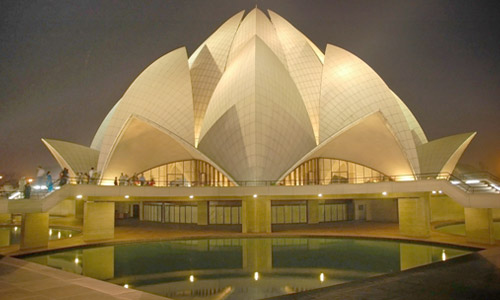
After breakfast, take a sightseeing tour of Old Delhi: the majestic Red Fort, a marvel in red sandstone, Jama Masjid, the largest and most splendid mosque in India, Rajghat, the memorial of Mahatma Gandhi, where he was cremated. The sightseeing continues to explore New Delhi including President House, India gate; built to honour and pay a tribute to the Indian soldiers who sacrificed themselves during the Afghan war, Birla Mandir (Laxmi Narayan Temple), Humayun’s Tomb, lotus shaped Bhai’s Temple, Qutub Minar; built by Qutub-ud-din Aibek of the Slave Dynasty. Sri Radha Parthasarathi Mandir, generally known as the ISKCON Delhi temple. Also you can opt for a cycle rickshaw ride through the lively and colourful market of Chandani Chowk. Later return to the hotel for overnight stay.
Delhi, the towering capital city of independent and largest democratic country in the world: India. It is one of India's modern and fastest developing cities with charismatic charm on its visitors. Delhi is located and sprawled on the both side banks of Yamuna River. The city is enriched with culture, architecture and human diversity, Delhi city is blend of ancient past of India with vibration of modern world. Delhi houses finest museums, historical monuments, sightseeing places, and temples in the country. Delhi is designed by the British architect Sir Edwin Lutyens (1869-1944) & is tree-lined & spacious.
19 Day: Delhi – Haridwar (220 kms: 6 hrs)
After breakfast check out the hotel and drive to Haridwar, on arrival transfer to the hotel. After relaxation, in the evening attend the most speculative “Aarti” at the holy River Ganga. Aarti takes place on the ghat in the evening, after sunset. A group of Brahmans hold huge fire bowls in their hands and offer their holy mantras to river Ganges, Shiva - the Hindu God of destruction, Surya - the Sun God and the entire Universe. The scenario at Har- Ki-Pauri at the time of Ganga-Aarti is mesmerizing. Afterwards return to the hotel for overnight stay.
Haridwar, 'The gateway to the Gods'. "This place is very beautiful", at one site one will say so and fall in love with the scenic beauty of the blend of height and plains. In its long history back to pre-historic time, the Haridwar got its name from the rishis. According to the mythology it is known as Kapilsthan, legend goes that the suryavnshi Prince Bhagirath performed penance here to salvage the souls of his ancestors who had perished due to the curse of the sage Kapila. The penance was answered and the river Ganga trickled forth from Lord Shiva's locks and its bountiful waters revived the sixty thousand sons of King Sagara. Mythologically, drops of nectar churned out from the primordial ocean fell at the four sites of the Kumbh mela including Haridwar. The kumbha mela, happening once every 12 years and the Ardha Kumbha Mela (Coming once every six years) are big draws.
20 Day: Haridwar – Rishikesh – Haridwar (Excursion: 22 kms: 30 mins: One way)
Today morning after breakfast take a religious and spiritual sightseeing tour of Haridwar and Rishikesh, visiting Daksh Mahadev temple - also known as Shri Daksheshwar temple, attributed to King Daksha who was brought back to life by Lord Shiva, Gorakhnath Temple, Bharat Mata Temple - is the representation of India in the form of a mother goddess, Mansa Devi Temple, one of the most popular and most visited temples of Haridwar, later take an excursion to Rishikesh, may visit the various temples and Ashrams: Bharat temple - temple has been named after Lord Ram’s second brother ‘Bharat’; however the presiding deity of this temple is Lord Vishnu, Shatrughan Temple - an ancient temple dedicated to Shatrughan, the youngest brother of Lord Rama, Laxman Jhoola, Rishikund and Raghunath Temple - legendary tank where Lord Rama took bath is a popular bathing spot for pilgrims, Swarg Ashram Gita Bhawan Parmath Niketan, Jhoola Triveni Ghat, Shivanand Ashram Kailash Ashram academy of Meditation. After visit drive back to Haridwar. Overnight stay at the hotel.
Rishikesh, also known as the 'place of sages' is Haridwar, at the confluence of the Chandrabhaga and Ganga. It is believed that God by the name of 'Hrishikesh' had appeared as answer to the hard penances by Rabhiya Rishi and henceforth the place derived its name. It is most ideal destinations for meditation, yoga and other aspects of Hinduism. For the adventure seekers, Rishikesh is the suggested place for starting their trekking expeditions to the Himalayan peaks and for rafting. Also, International Yoga Week, which attracts participation from across the world, is held here, every year, in February on the banks of the Ganga. The Yoga Centers of Rishikesh have enhanced the significance of the place.
21 Day: Haridwar – Delhi (220 kms: 6 hrs) – Hometown
Today morning after breakfast, check out the hotel and drive to Delhi International airport to board the scheduled flight for home town. On departure tour concludes with happy memories.
Since the precise cost of a customized tour is subject to specific accommodation choices, travel period (date/month/year), nos of pax travelling together and other custom preferences. However, to enable you to chalk out your holiday plan, we suggest following budget guidelines (minimum 2 people are travelling together & sharing one double room) for a customized tour:


Design your tour with our expertise Plan My Trip!