01 Day: Arrival Delhi
Welcome at Indira Gandhi International Airport in Delhi, assistance on arrival, our representative escorts you by a/c car and transfer to the pre-booked hotel. After your check in, you will be given all the required documents related to your tour plan; he will explain all your queries about the entire tour plan. After relaxation in the evening witness Light and Sound show at Red fort. The show projects splendid history of 5000 years old city, a truly memorable experience. Return to the hotel for overnight stay.
Light and Sound Show: A spectacular sound and light show at the Red Fort. Which makes the 5,000 years old history of the city come alive. Amidst the tranquility of the splendidly panoramic and historic environs of the Red Fort, select episodes from the annals of Delhi's historic and legendary past are vividly brought to life. Special effects combine with the unique ambience to make this show a hauntingly unforgettable experience.
02 Day: Delhi
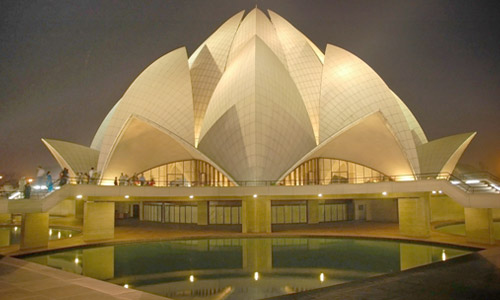
Today morning after breakfast, take a sightseeing tour & explore the historic city, starting with Old Delhi: (Shahajahanabad) the majestic Red Fort, a marvel in red sandstone, Jama Masjid, the largest and most splendid mosque in India, both built by Emperor Shah Jahan of Taj Mahal fame; Rajghat, the memorial of Mahatma Gandhi, where he was cremated. Later take a cycle rickshaw ride through the bustling and colourful bazaar of Chandani Chowk. The sightseeing continues to explore the best tourist attractions of New Delhi including President House (Rashtrapati Bhawan), the regal residence of British rulers; a palace built for British Viceroys. India gate; built to honour and pay a tribute to the Indian soldiers who sacrificed themselves during the Afghan war, then visit Birla Mandir (Laxmi Narayan Temple) built by the Birla family. Humayun’s Tomb, lotus shaped Bhai’s Temple, Qutub Minar; built by Qutub-ud-din Aibek of the Slave Dynasty. Afterwards return to the hotel for overnight stay.
Delhi, the towering capital city of the independent and largest democratic country in the world: India. It is one of India's modern and fastest developing cities with a charismatic charm on its visitors. Delhi is located and sprawled on both banks of Yamuna River. The city is enriched with culture, architecture and human diversity, Delhi city is a blend of the ancient past of India with the vibration of the modern world. It houses some of India’s finest museums, historical monuments, sightseeing places, and temples. The city designed by the British architect Sir Edwin Lutyens (1869-1944) & is tree-lined & spacious.
03 Day: Delhi – Patna (By Air)
After breakfast check out the hotel and transfer to airport to board the flight for Patna. On arrival, transfer to the hotel. Later take a sightseeing tour of the city visiting the Har Mandir The second most important gurudwara in India, the Takht Har Mandir was built by Guru Gobind Singh, the 10th guru of the Sikhs. Golghar built for the purpose of storing grains to be used in the times of famines. Also visit Jalan Museum situated over the ruins of the Qila House, the site of Shershah’s fort. It is a private collection containing Chinese paintings and an invaluable collection of silver and jade filigree work of the Mughal period and Bihar Institute Of Handicraft and Design, the institute is trying to revive the old crafts and art of Bihar to modern use, especially Mithila paintings. After visit drive back to hotel for overnight stay.
Patna: Situated on the southern bank of the holy river Ganges, Patna is a large city with a considerable population and quite a few places of interest. A typical tropical city of northern India, Patna is famous for its glorious past, especially the period of Magadh and the Mauryan rule. The historical monuments and beautiful countryside make it an interesting place to visit. It is the capital city of the Indian state of Bihar. Patna is a part of the Buddhist Circuit of Bihar, as it is the ideal gateway for all the places on this circuit.
04 Day: Patna – Nalanda – Rajgir – Bodhgaya (190 kms: 5 hrs)
After breakfast, check out the hotel and drive to Bodhgaya. Enroute visiting Rajgir and Nalanda. Rajgir, a great center of Buddhist learning and one of the most famed university citadels of ancient times. Rajgir, it was once the ancient capital of the powerful Kingdom of Maghada. From the out - skirts of Rajgir, a historic road leads to Gridhakuta. Nalanda Mahavihara an institute for the study of Pali literature houses rare Buddhist manuscripts. Though Buddha visited Nalanda several times during his lifetime, this famous centre of Buddhist learning shot to fame much later, during 5th - 12th centuries. Then proceed for Rajgir the ancient capital of Magadha kings. The Buddha often visited Rajagriha to retreat at the Jivkamaravana monastery, preaching and meditating on the Gridhakuta Hill. The disciples of the Buddha built many structures here. Rajgir is also sacred to Jains as Lord Mahavira studied and meditated here. Later continue to drive to Bodhgaya. On arrival, transfer to the hotel for overnight stay.
Nalanda: is believed to be the oldest university in the world. Founded in the 5th century BC, it became a renowned centre of Buddhist and Jain learning. Hiuen Tsang, the Chinese traveller, spent several years here in the 7th century AD. Nalanda Archaeological Museum has a magnificent collection of Pali and Mauryan statues, bronze and manuscripts. Nalanda Mahavihara an institute for the study of Pali literature houses rare Buddhist manuscripts. Though Buddha visited Nalanda several times during his lifetime, this famous centre of Buddhist learning shot to fame much later, during 5th - 12th centuries.
Rajgir: the ancient capital of Magadha kings. The Buddha often visited Rajagriha to retreat at the Jivkamaravana monastery, preaching and meditating on the Gridhakuta Hill. The disciples of the Buddha built many structures here. Rajgir is also sacred to Jains as Lord Mahavira studied and meditated here. The first Buddhist Council was held here after the Buddha's nirvana.
05 Day: Bodhgaya
After breakfast take a sightseeing tour of the Buddhist city: visiting Mahabodhi temple - The temple is an immense attraction to the Buddhists, and stands near the Maha Bodhi tree under which Tathagat, or Gautama attained enlightenment, Mahabodhi Tree. Bodhgaya, placed in the state of Bihar is one of the most respected pilgrimage centres of the Buddhists all over the world. Here Lord Buddha achieves Nirvana or enlightenment, after forty days of harsh sacrament, under a pipul tree. Ajapala Nigrodha Tree, Great Buddha Statue, Rajayatna Tree, Muchalinda Lake, Animesh Lochana Chaitya, Cankamana, Chinese Temple, Indosan Nippon JapaneseTemple, Ratnaghara, Royal Bhutan Monastery, Thai Monastery, Vietnamese Temple. Afterwards return to the hotel for overnight stay.
Bodhgaya: is one of the sacred places for the Buddhists as well as for the Hindus. Here under the Bodhi Tree, Gautama attained supreme knowledge to become Buddha, the `Enlighted One'. The Buddha attained enlightenment in Bodhgaya, under the Bodhi tree, which still stands in the temple premises. The magnificent Mahabodhi temple in Bodhgaya is an architectural amalgamation of many centuries’ cultures and many heritages that came to pay their homage here. The temple definitely has architecture of the Gupta and later ages, inscriptions describing visits of pilgrims from Sri Lanka, Myanmar and China between 7th and 10th century AD.
06 Day: Bodhgaya – Varanasi (250 kms: 6 hrs)
After breakfast check out the hotel and drive to Varanasi, en route visit to Sarnath, located at 10 Kms from Varanasi where Lord Buddha gave his first sermon to the five holy men; visit at Dharmarajika Stupa The 110 ft tall Dhamekh Stupa marks the place where Buddha preached first sermon., also visit to Archaeological museum, the collection of ancient Buddhist relics and antiques comprising numerous Buddha and Bodhisatva images, also see the Ashok Pillar with 4 lions, built in 3rd Centaury BC., symbolize both Ashoks's imperial rule and the kingship of the Buddha. The four-lion capital was adopted as the emblem of the modern Indian republic. After visit continue to proceed to Varanasi. On arrival, transfer to the hotel for overnight stay.
Varanasi: Sandwiched between the rivers Varuna and Ashi as they join the Ganges, Varanasi takes its name from its location. It is also called Kashi, the city of light, but the British, in an endeavor to simplify matters, had coined their own name for the place—Benaras. Varanasi is the city of a thousand temples. The main object of all devotees is the Kasi Vishwanath Temple. According to Hindu belief, Benaras or Varanasi as it is known, is the cosmic center of the Universe. The renowned American novelist Mark Twain once wrote, "Benaras is older than history, older than tradition, older even than legend and looks twice as old as all of them put together.
07 Day: Varanasi
Early morning, take a BOAT RIDE at holy river Ganges, during the sunrise the city and river come alive, in the magical rays of the Sun; the city looks so exotic and lively: People bathe early in the morning to offer the prayers to the rising sun. Later return to the hotel for breakfast, afterward take sightseeing tour of the city visiting various ghats of Varanasi: two main cremation ghats are Manikarnika & Harishchandra, sightseeing continues with visiting the Bharat Mata temple, houses a huge relief map of the whole of Indian subcontinent and Tibetan plateau. Sankat Mochan temple, Tulsi Manas Mandir, the most famous temple is the Kashi Vishvanath known as Golden Temple due to 15.5 meters high golden spire, though off-limits to non-Hindus, can be seen from the top floor of the oldhouse opposite it. Durga temple also called Money Temple, Banaras Hindu University: the largest residential university in Asia, with over 12,000 students living on its campus, the campus spread over 1350 acre (5.5 km?). In the evening visit at the bank of Ganga River to witness speculative Aarti (worship) ceremony, as this beautiful ritual process with brass lamps with chanting of Mantra in presence of crowd, every moment fills you with spiritual thoughts and feelings. Afterwards return to the hotel for overnight stay.
08 Day: Varanasi – Khajuraho (By Air)
After breakfast check out the hotel and drive to the airport, to board the schedule flight for Khajuraho. On arrival transfer to the hotel, after refreshment visit Raneh Falls is one of the prominent tourist attractions, which is named after King Rane Pratap, the erstwhile ruler of the region, situated in close vicinity of the destination, the waterfall emerged at the confluence of Ken and Khuddar rivers. Also visit Archaeological museum with its collection of stone sculptures of the Chandela dynasty. In the evening enjoy the speculative light and sound show. Afterwards return to the hotel for overnight stay.
Light and Sound Show: This fascinating light & sound spectacle evokes the life and times of the great Chandela Kings and traces the story of the unique temples from the 10th Century to the present day. The 50 minutes sound and light show is conducted by tourism department in the garden of western group of temples. The show is entertaining and informative about the construction, history and importance of the temples. The life and times of the great Chandela kings and the legend and grandeur of the unique temples from the 10th century to the present day are narrated in the voice of Amitabh Bachchan– the Bollywood legend.
09 Day: Khajuraho
After breakfast explore Khajuraho, is worldly known for its magnificent temples of erotica built between 950 A.D. and 1050 A.D. Khajuraho - the very name, Khajuraho, arouses strange dreams even in daytime of full bodied feminine forms frozen in stone, so real that you wonder whether they might come alive at a touch. Khajuraho is world heritage town, the temples are scattered in an area of 8 sq km. take a sightseeing tour visiting Western group of Temples consisting of the massive Laxman Temple dedicated to lord Vishnu, the Laxmi and Varaha temples dedicated to Vishnu’s consort Laxman, the Kandariya Mahadev temple dedicated to Lord Shiva and the Chausath Yogini temple dedicated to goddess Kali. Later take a sightseeing tour of Eastern group of Temples which consists of 3 Hindu and 3 Jain temples, their proximity attests to the religious tolerance of the times in general and of the Chandela rulers in particular, visit the Jain temples of Parsvanath, Adinath, and Shanti Nath. Also visit the temples of Vamana and Brahma/Hanuman both dedicated to lord Vishnu. Afterwards return to the hotel for overnight stay.
Khajuraho: The fascinating temples of Khajuraho, India's unique gift of love to the world, in the state of Madhya Pradesh, were built between 950 and 1050 A.D. It derives its name from the Khajur tree (the date palm tree) which can be found in abundance in the area. The divine sculptures in these temples are a tribute to Life itself, embodying everything that is sublime and spontaneous about it. With the wane of the Chandela Empire, these magnificent temples lay neglected, and vulnerable to the ravages of Nature. It was only in this century, that they were rediscovered, restored and granted the recognition that they justly deserve. Originally there were 85 temples, of which only 22 still exist. These magnificent temples dedicated to Lord Shiva, Lord Vishnu and the Jain Tirthankaras.
10 Day: Khajuraho – Orchha (175 kms: 4 hrs)
After breakfast check out the hotel and drive to Orchha, on arrival transfer to the hotel, after refreshment drive to the historic city of Jhansi is 18 km from Orchha. It is a famous tourist destination and is known for the exploits of Rani Jhansi, who played an important role in fighting the British during the revolt of 1857. A number of monuments belonging to this period including Jhansi Fort and Rani Jhansi's Palace are important tourist attractions of Jhansi. Later enjoy the speculative light and sound show: depicting the history of Orchha, return to the hotel for overnight stay.
Orchha: The medieval city of Orchha, in the state of Madhya Pradesh, seems to have frozen in time, its palaces and temples still retaining their original grandeur. Orchha had the distribution of being the capital of one of the largest and most powerful kingdoms of Central India. The Bundela Rajput chieftain, Rudra Pratap, founded the city, located by the side of the beautiful Betwa River, in the 16th century. The word Orchha means 'hidden'. When the Tughlaqs, who were ruling Delhi in the 15th century, pushed the Bundelkhand rajas out of Garkhundar, they retreated to distant Orchha.
11 Day: Orchha – Gwalior – Agra (250 kms: 5 - 6 hrs)
After breakfast, enjoy the scenic beauty of Betwa River Surrounded by Sheesh Mahal, & Chattaris and Ram Temple. Afterwards check out the hotel and drive to Agra, enroute stop over at Gwalior (120 kms from Agra) and take sightseeing of the majestic Gwalior fort is one of the largest and mightiest forts in India. Also visit Sas-Bahu Temples are 11th-century temples of Lord Vishnu while Teli-ka-Mandir is a 300-metre-high Vishnu temple of the 9th Century, Man Singh Palace, later proceed to Agra. On arrival, transfer to the hotel, in the evening one should visit Oswal Emporium to watch the replica of Taj Mahal it took 10 years for the artists to build this artistic epitome, also enjoy light and sound show “Mohabbat-the-Taj: the saga of love”, the only show of its kind in India! Afterwards return to the hotel for overnight stay.
Gwalior: Steeped in the splendour of its past, the ancient capital of Gwalior has yet made a successful transition into a modern Indian city, vibrant and bustling. A multitude of reigning dynasties, of the great Rajput clans of the Pratiharas, Kacchwahas and Tomars have left indelible etchings of their rule in this city of palaces, temples and monuments. Gwalior's tradition as a royal capital continued until the formation of present day India, with the Scindias having their dynastic seat here.
Agra is famous as being home to one of the Seven Wonders of the World-the Taj Mahal. Built by the great Mughal emperor Shahjahan, an eternal love story written on the shimmering marble for his wife Mumtaz. Agra is pleasant town with comparatively slow pace, Agra is known for its superb inlay work on marble and soapstone by craftsmen who are descendant of those who worked under the Mughals. The city is also famous for its carpets, gold thread embroidery and leather shoes. Agra, and the nearby city of Fatehpur Sikri, is conveniently close to Delhi.
12 Day: Agra
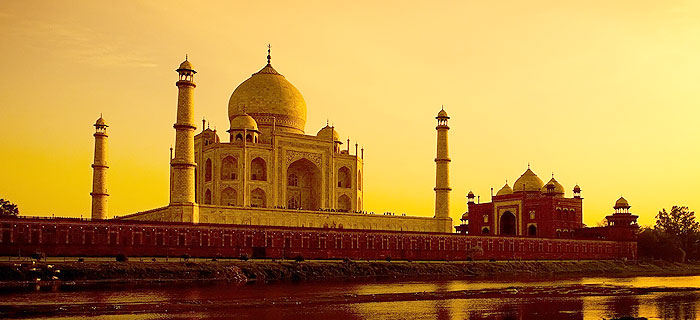
Early morning visit world’s most popular and beautiful monument: Taj Mahal with its’ fabulous view at the time of sunrise. Taj Mahal, a beautiful architectural monument is one of the 7 wonders of the world. This historical masterpiece is an illustration of the fusion of diverse architectural styles. Taj Mahal is the crown of all the lovely buildings in the world and a symbol of eternal love. The tour continues with a visit to Agra Fort. The fort was built in 1576 AD by great Mughal Emperor Akbar, structured and designed with red stoned barricaded; here you will find the splendid Pearl Mosque and various other classic example of art: Jahangir Mahal, Moti Masjid, Macchhi Bhawan, Nagina Masjid, Diwan-i-Khas, Sheesh Mahal, Diwan-e-Am, and Meena Bazaar and Musamman Bhurj. Emperor Shahjahan imprisoned by his rebellious son Aurangzeb in the Musamman Bhurj, would see his love reflecting through the Taj Mahal, where his dear wife was cremated. Afterwards visit Tomb of Itamad-ud-Daula, 35 kms from Agra, built by Empress Noor Jahan daughter of Shahjahan, this monument a tribute to her great father. Later return to the hotel for overnight stay.
Note: Taj Mahal is closed on every Friday.
13 Day: Agra – Fatehpur Sikri – Jaipur (240 kms: 5 - 6 hrs)
Today morning after breakfast check out the hotel and drive to Jaipur. Enroute stop over at Fatehpur Sikri, the old deserted town of the Mughal kingdom, built in red sandstone in honour of Saint Salim Chisti who blessed birth of 3 sons to Emperor Akbar. Notable among them is the Diwane e Khas; Punch Mahal, the Tomb of Salim Chisti, and the Buland Darwaza, one of the largest and tallest gateways in the world. Also stop over at Abhaneri near Jaipur, and visit Step Well, it was built by King Chanda of the Chauhan Dynasty, and was dedicated to Hashat Mata, Goddess of Joy and Happiness upon completion. Afterwards continue drive to Jaipur. On arrival, transfer to the hotel for overnight stay.
Jaipur is widely known as the ‘Pink City’ of India. The walls, houses and buildings of the entire city were washed with pink colour for a grand and royal welcome of Prince Albert and Queen Victoria of Britain, who visited Jaipur in 1853 A.D. This splendid city as was founded in 1727 A.D by one of the greatest ruler Jai Singh II. Jaipur is surrounded by hills on three sides. Jaipur is the only city in the world, which is designed in accordance with Hindu architectural science called Shilpa Shastra. The city had been designed in rectangular shape of 9 blocks, depicting the 9 partition of the universe.
14 Day: Jaipur
Today morning after breakfast, explore the Pink City with an excursion to splendid Amber Fort, situated just outside the city, built in the 15th Century by Rajput King Man Singh. Later visit another mighty and majestic Nagargarh fort, close to Amber fort. Drive back to the main city to visit the imperial City Palace - present residence of the royal family of Jaipur. The incredible Jantar Mantar was innovated and constructed by Jaipur King Swai Jai Singh. Splendid Hawa Mahal, also known ‘Palace of Winds’ Birla Temple, with its white shimmering marble glittering in the night. You can visit to Amber fort to see the Light and Sound Show: holds the history of a citadel, pulsating with a legendry past of 600 years & 28 kings of the Kachhwaha dynasty, before their capital moved to Jaipur. Later you can explore the bustling market by hoping onto a cycle rickshaw ride. Enjoy your evening at the most authentic and ethnic village resort: called Chokhi Dhani, designed on the theme of an ethnic village of Rajasthan with lots of traditional environment with entertainment like folk dances, puppet shows, astrology, music, camel ride, Here you can enjoy the traditional Rajasthani food. Afterwards return back to hotel for overnight stay.
15 Day: Jaipur – Neemrana – Delhi (260 kms: 6 hrs) – Aurangabad (By Air)
Today morning after breakfast check out the hotel and drive to Delhi, en route visit to the one of the magnificent fort of Rajasthan, Neemrana; now converted into the luxury heritage hotel, you may opt to have lunch and Zip Tour over here, an exciting and adventurous activity. The Zip tour is an amusement ride wherein the person hangs his weight through a harness which is suspended via pulley from a cable. Afterwards continues drive to Delhi airport to board the scheduled flight for Aurangabad. On arrival, transfer to the hotel for overnight stay.
Neemrana Fort- It was a tributary chiefship of the former Alwar state. The track is sandy and bleak and is known as Rath. The place is said to be the home of chauhan Rajput claiming descent from Prithvi Raj the last Hindu emperor. One of the descendents of Prithvi Raj the, embraced Islam and settled here. That is why the old lineage is shown by the title Rao and was recognized so by the ruler of Alwar. Lord lake in 1803, as a punitive measure for the shelter and assistance given by then chief to the Marathas, confiscated the villages of the estate and made them over to Alwar. However, about one third of state was subsequently restored to the cheif, who remained a tributary of Alwar state.
16 Day: Aurangabad – Ajanta – Aurangabad (105 kms: 2 hrs one way)
After an early breakfast take an excursion to the famous Ajanta caves. Recognized as the World Heritage Site today, it was discovered during the 19th century by a group of British officers who were on a tiger hunt. Later if time permit you may opt to visit Jami Masjid, Bharatmata Mandir, the Chand Minar, Elephant Tank and 'Chini Mahal' or Chinese Palace are the important monuments inside the fort. Khuldabad ("Heavenly Abode"), Many historical figures are buried here including Aurangzeb, the last major Mughal emperor. Afterwards drive back to Aurangabad and visit Bibi ka Maqbara; tomb of Begum Rabia Durani, queen of Mughal Emperor Aurangzeb. Due to its resembling Taj, this is called Taj Mahal of Deccan. Followed by visit at Panchakki, an intriguing water mill, popular underground water channel which pass through more than 8 kms to its source away in the mountains. Overnight stay at the hotel.
Ajanta, It was only in the 19th century, that the Ajanta group of caves, located deep in mountain range of Sahyadri, built into the curved mountain side, on the top of Waghora River. These caves were discovered unexpectedly by some British officers, who were on hunt in Sahyadri Hills. Ajanta caves enchants the great period of Buddhism during 200 BC till 650 Ad. There 29 caves were built as sheltered retreats of the Buddhist monks, who educated and performed rituals in the Vihara and Chaitya, the ancient place of religious and spiritual learning, and key hub of the Buddhist era and it’s cultural movement.
Note: The Ajanta Caves are closed to public on all Monday.
17 Day: Aurangabad – Ellora (30 kms: ½ hr) – Mumbai (By Air)
After breakfast take a sightseeing tour of Ellora, one of the highly visited World heritage sites of India. It houses 34 monasteries and temples with some exclusive uninterrupted sequence of monuments that date back from 600 to 1000 AD. The temples of Ellora are dedicated to Brahmanism, Jainism, and Buddhism. Afterwards check out of the hotel and drive to the airport to board the flight for Mumbai. On arrival, transfer to the hotel for overnight stay.
Ellora, The Ellora caves, 34 in number, are carved into the sides of a basaltic hill, 30 kms away from Aurangabad city. The optimum specimens and masterpiece of cave temple architecture, Ellora caves elaborates frontage and elegantly decorated ancient interiors. These structures define the era of 3 religions Buddhism, Hinduism and Jainism, these caves were cut and carved between 350 AD to 700 AD. In the South side there are 12 Buddhist caves, 17 Hinduism caves are in the centre and 5 Jain caves are in the north side.
Note: The Ellora caves are closed to public on all Tuesday.
18 Day: Mumbai
Today morning after breakfast take a sightseeing tour of Mumbai city, firstly visit to Gateway of India and cruise by motorboats to Elephanta Caves -ancient rock cut cavesdedicated to Lord Shiva. Later cruise back to Gate Way of India. And sightseeing continues visiting Prince of Wales Museum- A heritage museum exhibits ancient artifacts. Parliament house- (From outside), Nariman Point- Commercial Hub, Marine Drive-a most beautiful laid boulevards of the city. Dhobhi Ghat- a famous open air laundry, Mani Bhawan- Known also Gandhi Bhawan.Chhatrapati Shivaji Terminus (CST), formerly Victoria Terminus, is a UNESCO World Heritage Site and an historic railway station in Mumbai, Bandra Worli Sealink, which crosses the Arabian Sea, linking the Mumbai suburbs with south Mumbai, is viewed as an engineering marvel. Later return to the hotel. You may also opt to enjoy Mumbai night life visiting pub, bars and restaurants of the city. Overnight stay at the hotel.
Mumbai a cluster of Seven Islands and derives its name from Mumbadevi, the patron goddess of the koli fisher folk, its oldest inhabitants. Mumbai pulsates with activity. It is a city that is disciplined by no time frame, neither day nor night. It is also the country's financial powerhouse, the nation's industrial heartland, and its economic nerve center. Dazzling shopping arcades, exciting sport activity, nightclubs & discotheques, theatre & music, gourmet restaurants and interesting sightseeing. It offers visitors a heady mix of all this and more.
Note: Elephanta Caves and Prince of Wales museum are closed on every Monday.
19 Day: Mumbai
After breakfast, takes an excursion to Kanheri caves (40 kms from the main city) The 109 caves are reachable through the Sanjay Gandhi national park, a good way to reach a religious destination. The place is splendid, considering the integration of lush greens and rare artistic examples, but is surprising to learn that once it was a thriving trade route, and home to a Buddhist university, well known to the world. Also visit at Sanjay Gandhi National Park, the main attraction of the park is its lion and tiger safari. One of the main attractions to the National Park is the lion safari, which has been drawing people to the park ever since it was started. If time permits than visit The pagoda, is to serve as a monument of peace and harmony. The Global Vipassana Pagoda has been built out of gratitude to the Buddha, his teaching and the community of monks practicing his teaching. Afterwards return to the hotel for overnight at Mumbai.
The Kanheri Caves constitute a group of rock-cut monuments that are located north of Borivali on the western outskirts of Mumbai, India. Located within the forests of the Sanjay Gandhi National Park, they were chiseled out of a massive basaltic rock outcropping. These caves date from the first century BCE to the 10th century CE. One hundred and nine caves have been carved from the basalt. Unlike the elegant splendor of the adjacent Elephanta Caves, the earlier cells are spartan and unadorned. Each cave has a stone plinth for a bed.
20 Day: Mumbai – Hometown (By Air)
After breakfast, check out the hotel and drive to the airport to board the flight for hometown. Tour concludes here with happy memories.
Since the precise cost of a customized tour is subject to specific accommodation choices, travel period (date/month/year), nos of pax travelling together and other custom preferences. However, to enable you to chalk out your holiday plan, we suggest following budget guidelines (minimum 2 people are travelling together & sharing one double room) for a customized tour:


Design your tour with our expertise Plan My Trip